Worm Bin vs Compost Tumbler: Which Fits Your Yard? (October 2026)
Choose a worm bin for kitchen scraps and castings, or a compost tumbler for larger batches of yard and food waste. Your available space, preferred routine and compost needs will point to the better fit.
On this page (9 sections)
- Worm bin vs compost tumbler: what is the main difference?
- Which setup fits your space?
- What can you put in each system?
- Which one is easier to manage?
- What compost do you get from each method?
- Which setup is better for a busy household?
- Which products fit each composting style?
- How do you choose between a worm bin and a tumbler?
- Worm bin vs compost tumbler: which should you pick?
Choose a worm bin for kitchen scraps and worm castings, or a compost tumbler for larger outdoor batches that you mix by rotating. In a worm bin vs compost tumbler comparison, the best fit depends on your space, scraps and preferred routine.
A worm bin uses composting worms to process food scraps in bedding. A tumbler holds a batch of compost ingredients and mixes them as you rotate the chamber.
These methods make different kinds of compost and ask for different care. The home worm composting guide explains how a worm setup works, while the dual-chamber tumbler guide covers outdoor batch systems.

Worm bin vs compost tumbler: what is the main difference?
A worm bin relies on worms to process food scraps, while a tumbler relies on turning and time to break down a batch. Pick the method that matches the material you want to compost most often.
With a worm bin, you add bedding, worms and food scraps. In a tray model, worms can move upward toward new food, leaving finished castings behind in lower trays.
A tumbler has no worms as its working method. You load suitable materials, rotate the chamber to mix them and let the batch break down.
The worm bin is a living system that needs steady care. The tumbler is a batch system that needs material, air circulation and regular turning.
Which setup fits your space?
A worm bin suits a small area, while a tumbler needs a yard spot with room to rotate. Measure the space you can use, including access for feeding, unloading and care.
The VermiHut Plus measures 17 x 17 x 13 inches and is designed for indoor or outdoor use. Its stacked trays use vertical space, which can help when floor area is limited.
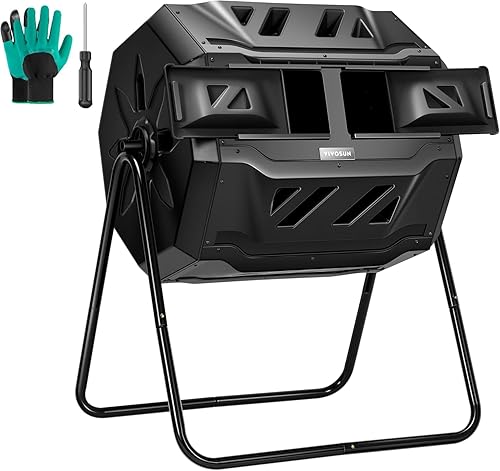
The VIVOSUN tumbler measures 26.25 x 23.6 x 36.5 inches and holds 43 gallons. The Miracle-Gro tumbler measures 25 x 23.5 x 29.5 inches, with 37 gallons split between two chambers.
A tumbler also needs clearance around it so you can rotate it and reach its doors. If your yard is tight, mark the dimensions on the ground and check that you can still walk around the bin.
Can a worm bin stay indoors?
A worm bin can work indoors if you can maintain its bedding, moisture and feeding routine. The VermiHut Plus is designed for indoor and outdoor use, and its compact dimensions can fit a kitchen, garage or other suitable spot.
Choose a location where the bin is easy to reach and won't be disturbed. For a smaller home, compare other options in our guide to indoor worm composters.
Does a tumbler need a large yard?
A tumbler needs less open ground than a loose compost pile, but it still occupies a fixed outdoor footprint. It also needs enough space for you to turn it and unload finished material.
If you want a tumbler but have limited space, consider the chamber layout and total dimensions before choosing. Our guide to compost tumblers for small yards can help you compare that setup.
What can you put in each system?
Worm bins are a natural fit for kitchen food scraps, while tumblers can handle broader outdoor batches. Check what materials you generate before deciding which bin to buy.
A worm bin usually takes scraps in smaller, regular additions. The worms process food among bedding, so the routine centers on feeding and keeping the habitat in suitable condition.
A tumbler can take a mix of suitable food scraps and yard materials. Its two chambers let you keep fresh material separate from a batch that is already curing.
Don't assume either method can take every household or garden waste. Review the accepted materials and your local composting guidance before adding meat, dairy, diseased plants or other materials that can cause trouble.
What scraps suit a worm bin?
Worm bins suit households that want to divert kitchen scraps and use the resulting castings in garden soil. You add food in measured amounts and allow the worms to process it over time.
The VermiHut Plus uses five stacking trays. Worms can move upward toward new food, leaving finished castings in lower trays.
A worm population needs time to adjust as feeding changes. Our guide to what to feed composting worms covers suitable foods and items to skip.
What materials suit a tumbler?
A tumbler suits a mixed batch of compost ingredients that can be turned together. The two chambers let you keep adding material to one side while the other side finishes.
The VIVOSUN has twin chambers, air vents and deep fins on its panels. The Miracle-Gro has two 18.5-gallon chambers and is designed to be rotated every few days.
Material balance still matters. For tips on mixing and turning a batch, see our guide to compost aerator tools.
Which one is easier to manage?
Choose the worm bin if you're comfortable maintaining a small living system; choose a tumbler if you prefer managing batches outdoors. Neither setup runs without attention.
A worm bin needs suitable bedding and moisture, along with a feeding pace the worms can handle. The VermiHut Plus includes a V-Board and coconut mat to support airflow and moisture balance, plus a worm saver tray that helps keep worms and compost material out of the liquid collection area.
A tumbler needs turning to mix its contents. Both featured tumblers use a rotating design, so you don't have to dig into a pile and mix it by hand.
The work differs by method. Worm-bin care focuses on the conditions inside the habitat; tumbler care focuses on batch ingredients, rotation and knowing when to leave a side to finish.
What happens if a worm bin gets too wet or smelly?
A worm bin can develop odor or moisture problems when conditions inside it are off. Check the amount of food, bedding and moisture, and make changes gradually.
The VermiHut Plus has a lid design with a built-in V-Board and coconut mat to support airflow and moisture balance. For common symptoms and practical adjustments, read how to fix worm-bin odors and fruit flies.
How often do you turn a compost tumbler?
A tumbler needs regular rotation to mix its contents, but the exact routine depends on the material and the instructions for the model. Miracle-Gro recommends a few rotations every few days for its tumbler.
Turning mixes the batch and helps break up clumps. If you want to track the conditions as compost breaks down, our guide to compost thermometers explains what a thermometer can tell you.
What compost do you get from each method?
A worm bin produces worm castings, while a tumbler produces compost from a mixed batch. Choose the output that makes sense for how you amend plants or beds.
Castings come from material processed by worms in the bin. They are a practical goal if you want a steady way to use kitchen scraps and collect a smaller, concentrated soil amendment.
Tumbler compost comes from a batch of compost ingredients. Depending on how much you add, it may suit broader garden uses and larger amounts of material.
Neither method guarantees a particular finish date or result. Composting depends on materials and conditions, so plan for the routine rather than a promised schedule.
If castings are your main goal, see how to harvest worm castings. For yard composting, choose a tumbler volume that fits the batches you can fill and manage.
Which setup is better for a busy household?
A tumbler can be easier when you want to keep fresh and curing batches apart, while a worm bin fits a regular kitchen-scrap routine. Pick the one that matches how often you cook, garden and tend equipment.
The VIVOSUN and Miracle-Gro both have two chambers. You can add fresh material to one side while leaving the other batch to finish, instead of mixing new scraps into the same chamber each time.
A worm bin is a better fit if you want to feed scraps as you produce them and use castings. It does require you to maintain the worm habitat and pay attention to the amount of food going in.
If you travel often or don't want another routine to monitor, think carefully about the care a worm bin needs. A tumbler still needs turning and loading, but it doesn't rely on maintaining worms.
Which products fit each composting style?
The VermiHut Plus fits a compact worm-bin setup, while either tumbler suits an outdoor batch approach. Compare the space, capacity and handling details that matter for your routine.
These models represent different composting methods, so their capacities aren't a direct measure of which is better. A worm bin's capacity depends in part on the worm habitat and feeding routine, while a tumbler's volume is for batch materials.
How do you choose between a worm bin and a tumbler?
Choose by the scraps you have, the room you can give the bin and whether you want castings or batch compost. Those three checks are more useful than comparing the two systems by name alone.
Start with your material. For mostly kitchen scraps and a compact indoor or outdoor spot, a worm bin can make sense; for mixed outdoor batches and more yard waste, look at a tumbler.
Next, check your routine. Worm bins need ongoing attention to bedding, food and moisture, while tumblers need batches and rotations.
Finally, match the output to the garden. If you want worm castings for plants, choose a worm bin; if you want to make compost from broader batches, choose a tumbler.
For a starting point, the VermiHut Plus is the compact worm-bin option here. The VIVOSUN offers the largest stated tumbler capacity in this comparison, while the Miracle-Gro is a smaller dual-chamber choice.
Worm bin vs compost tumbler: which should you pick?
Pick a worm bin if you want to process kitchen scraps in a compact space and collect castings; pick a tumbler if you want to turn larger outdoor batches. Then match the model dimensions and care routine to your yard.
A worm bin fits a household willing to maintain bedding, worms and moisture. A tumbler fits a gardener with outdoor space who can load and rotate batches.
If you choose worms, start with how to set up a worm bin. If you choose a tumbler, compare the available dual-chamber compost tumblers for a layout that fits your space.
Frequently asked questions
Is a worm bin better than a compost tumbler?
A worm bin is better for processing kitchen scraps in a compact space and collecting worm castings. A tumbler is better for larger outdoor batches and yard waste you want to mix by rotating the bin.
Choose based on the material you generate and the kind of compost you want.
Can a compost tumbler handle food scraps?
Yes, food scraps can go into a compost tumbler along with suitable yard materials. Add them in balanced batches and follow a composting guide for what to include.
A worm bin is another option when kitchen scraps are your main material and you want to manage them separately.
Do worm bins need to be turned?
Worm bins don't use the same turning routine as tumblers. Worms move through bedding and food as the bin is managed, while a tumbler mixes its contents when you rotate it.
Worm bins still need suitable moisture, bedding and feeding habits.
Which compost setup takes less space?
The VermiHut Plus measures 17 x 17 x 13 inches, so its stated dimensions take less floor space than either outdoor tumbler here. Leave room to access trays and maintain the bin.
Tumblers need a suitable outdoor spot and room to rotate.
Can you use a worm bin and tumbler together?
Yes, they can serve different jobs: use a worm bin for kitchen scraps and a tumbler for larger yard and garden batches. This split can help if you have enough room and want both worm castings and finished compost from a separate batch system.


