9 Best Indoor Worm Composters for Small Spaces (October 2026)
The best indoor worm composters for small spaces include the Urban Worm Bag Version 2 for steady scrap loads, the Blütezeit 3-Tray Worm Composter for included setup tools, and the VIVOSUN 3-Layer 30L Worm Composter for compact kitchens.
On this page (7 sections)
- How we chose indoor worm composters for small spaces
- Indoor worm composter picks by space and setup
- How do you choose an indoor worm composter for a small space?
- How do you set up a worm bin indoors?
- How should you care for an indoor worm composter?
- What mistakes make indoor worm bins harder to manage?
- Which indoor worm composter should you choose?
The Urban Worm Bag Version 2 is the best indoor worm composter for steady, larger scrap loads, with top feeding and bottom harvesting. The Worm Nerd WN55 and Worm Bucket suit tighter spaces, while the Blütezeit, VIVOSUN, TOPXIAN, Wormie's Home, Outsunny and F2C offer tray layouts in several sizes.
Worm bins need room for feeding, checking moisture and harvesting castings. Measure both the floor area and overhead clearance, then allow space to lift trays, open a lid or reach a harvest area without moving the bin.
For the basics, start with our guide to worm composting at home. If you're choosing between a bag, trays or a bucket, see how to choose a worm bin.
Our picks at a glance
-
1

-
2

-
3

- 4
 Check it
Worm Bucket 2.5-Gallon Starter Kit
Best for first-time composters - 5
 Check it
TOPXIAN 3-Layer 50L Worm Composter
Best for larger scrap volumes - 6
 Check it
Wormie's Home 4-Tray Worm Composter
Best for future expansion - 7
 Best for countertop spacesCheck it
- 8
 Check it
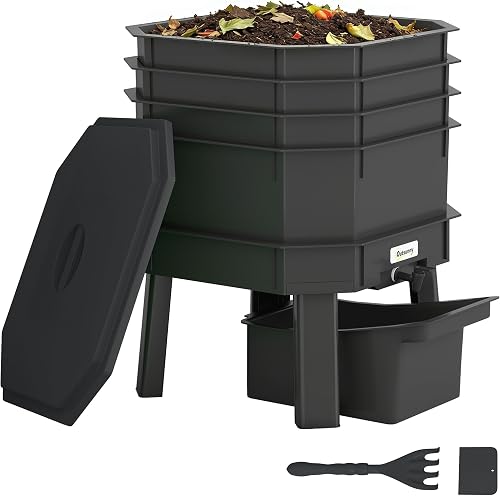
Outsunny 4-Tray Worm Composter
Best for ventilated layers - 9
 Best for gradual startsCheck it
How we chose indoor worm composters for small spaces
An indoor worm composter should match your scrap volume, available footprint and preferred harvest method. We compared the stated dimensions, capacity, construction, layout and setup items to identify where each model makes sense.
The Urban Worm Bag stands out for continuous feeding and bottom harvesting, but it takes more floor area than the compact bins. The Worm Nerd has a very small footprint, though its capacity isn't specified, so that measurement alone won't help you plan a larger household's scraps.
We also considered whether a bin offers a way to collect excess liquid, how much access its trays need, and whether setup materials are included. Brand claims about odor control and faster composting aren't a substitute for routine care, so choose by practical design features and how well they suit your space.
| Product | Best for | Capacity | Dimensions | Material | Our score |
|---|---|---|---|---|---|
| Urban Worm Bag Version 2 | steady scrap loads | 150.75 L | 26.75 x 26.75 x 31.75 in | 900D oxford fabric | 8.6 |
| Blütezeit 3-Tray Worm Composter | included setup tools | 7.93 gal | 16.14 x 12.6 x 13.78 in | Polypropylene | 7.9 |
| VIVOSUN 3-Layer 30L Worm Composter | compact kitchens | 30 L | 12.3 x 13.18 x 15.67 in | Plastic | 7.8 |
| Worm Bucket 2.5-Gallon Starter Kit | first-time composters | 2.5 gal | 12 x 11 x 14 in | Plastic | 7.5 |
| TOPXIAN 3-Layer 50L Worm Composter | larger scrap volumes | 50 L | 17.7 x 13.7 x 17.5 in | PP plastic | 7.3 |
| Wormie's Home 4-Tray Worm Composter | future expansion | 40 L | 16.55 x 16.55 x 13.99 in | HDPE plastic | 7.1 |
| Worm Nerd WN55 4-Tray Bin Kit | countertop spaces | Not specified | 9.88 x 8.88 x 12.56 in | Plastic | 7.0 |
| Outsunny 4-Tray Worm Composter | ventilated layers | 7.4 gal | 15.4 x 15.4 x 20.3 in | Polypropylene | 6.9 |
| F2C 3-Tier Worm Composter | gradual starts | 43.5 L | 14.17 x 13.98 x 18.62 in | Plastic | 6.6 |
Indoor worm composter picks by space and setup
The Urban Worm Bag Version 2 suits larger, steady scrap loads, while the Worm Nerd WN55 and Worm Bucket have smaller footprints. The remaining picks use trays, with different capacities and accessories for households that want room to grow.
Urban Worm Bag Version 2: Best for steady scrap loads
- 150.75 L capacity
- 26.75 x 26.75 x 31.75 in
- 900D oxford fabric
- Top feeding and bottom harvesting
The continuous flow design lets you feed from the top and collect castings from the bottom. Its larger footprint suits a dedicated indoor spot and a steady supply of scraps.
Pros
- Harvest from the bottom without separating worms from trays
- Detachable bottom helps control moisture
- Assembles without tools
Cons
- Takes more floor space than the compact tray picks
- Worm castings can take about 4–6 months to harvest from a scratch start
The Urban Worm Bag Version 2 uses continuous flow: add food and bedding at the top, then collect castings from the bottom. Harvesting doesn't require separating worms from trays.
Its 26.75 x 26.75 in footprint needs a dedicated floor spot, and the full unit stands 31.75 in high. The 900D oxford fabric body has a detachable bottom that can stay open or closed to help control moisture.
Urban Worm says assembly takes less than 5 minutes and needs no tools. Its startup guidance says a scratch start can take about 4–6 months before bottom castings are ready, so this is a poor fit if you expect an immediate harvest.
Choose it when harvest access matters more than conserving floor space. Skip it if you have only a narrow counter or need a bin that can tuck into a small cabinet.
Blütezeit 3-Tray Worm Composter: Best for included setup tools
- 7.93 gal capacity
- 16.14 x 12.6 x 13.78 in
- PP plastic
- Coco coir brick and soil meter included
This three-tray system comes with a coco coir brick, soil meter, tools, collection cup and spigot. Worms aren't included.
Pros
- Compact rectangular footprint
- Includes bedding and several setup tools
- Stackable trays provide separate work layers
Cons
- Worms must be sourced separately
- Taller than a small bucket-style bin
The Blütezeit 3-Tray Worm Composter has a 7.93-gallon capacity and a 16.14 x 12.6 in footprint. Its 13.78 in height may work on a sturdy shelf or under a counter if you can lift and remove the trays.
The kit includes a coco coir brick, non-woven fabric, collection cup, spigot, shovel, turning fork and soil meter. The meter tracks moisture, pH and light, but worms are not included.
The trays give you separate layers for feeding and collection. Check the space above the bin before setup, since you need room to lift a tray during care.
Choose this if you'd like several setup tools in one kit and want a mid-size tray system. Skip it if you need worms included or cannot reach above the bin.
VIVOSUN 3-Layer 30L Worm Composter: Best for compact kitchens
- 30 L capacity
- 12.3 x 13.18 x 15.67 in
- PP plastic
- Spigot and setup accessories included
The three-layer bin holds 30 L in a footprint suited to a kitchen or balcony. Its base spigot and included accessories support routine setup and liquid collection.
Pros
- Smaller footprint than many multi-tray bins
- Includes a soil meter, gloves and other accessories
- Stacked layers make contents accessible
Cons
- 30 L may be limiting for larger scrap volumes
- The plastic type isn't specified
The VIVOSUN 3-Layer 30L Worm Composter holds 30 L and measures 12.3 x 13.18 x 15.67 in. That compact footprint may fit on a balcony or in a kitchen where a larger square bin would crowd the floor.
Its stacked plastic design has ventilation slits and a base spigot for collecting liquid. The package includes a soil meter, gloves, rubber scraper, rack, measuring cup and anti-slip feet.
A 30 L capacity can suit regular food scraps when space is limited, though households producing larger volumes may outgrow it. Leave room below the spigot for a cup and enough access to drain the base.
Choose it for a compact, three-layer setup with accessories. Skip it if you want more stated capacity; the TOPXIAN offers 50 L and the Urban Worm Bag offers a much larger format.
Worm Bucket 2.5-Gallon Starter Kit: Best for first-time composters
- 2.5 gal capacity
- 12 x 11 x 14 in
- Coco coir bedding and perlite drainage bag
- Spigot
This compact kit includes bedding, drainage material, a spigot and two setup and feeding guides. Its capacity makes it a smaller starting point than the tray systems.
Pros
- Small footprint for an apartment or classroom
- Bedding and drainage materials are included
- Two color guides cover setup and feeding
Cons
- Lowest capacity among these picks
- Worms are not included
The Worm Bucket 2.5-Gallon Starter Kit has a 2.5-gallon capacity and a 12 x 11 in footprint. Its 14 in height is easy to compare with a kitchen shelf, classroom counter or apartment storage area.
The kit includes a coco coir bedding brick, perlite drainage bag and spigot, along with separate setup and feeding guides. Composting worms aren't included, so plan how you'll source them before setting up the bin.
Its modest capacity can make feeding easier to keep in proportion when you're starting out. It may not suit a household that produces a large amount of scraps each day, and it offers less room than the tray systems.
Choose it for a first worm bin or a limited indoor spot. Skip it if your household generates a steady, large volume of scraps and you want to avoid upgrading soon.
TOPXIAN 3-Layer 50L Worm Composter: Best for larger scrap volumes
- 50 L capacity
- 17.7 x 13.7 x 17.5 in
- PP plastic
- Three reusable trays
The 50 L capacity offers more room than the 30 L tray systems while keeping a vertical layout. The set includes a coco brick, gloves, rake, shovel and measuring cup.
Pros
- Largest stated capacity among the compact tray picks
- Three reusable trays
- Includes bedding and basic tools
Cons
- Needs more floor area than the 30 L models
- Three layers are described in the title and three reusable trays are specified
The TOPXIAN 3-Layer 50L Worm Composter offers 50 L of capacity in a 17.7 x 13.7 in footprint. At 17.5 in tall, its vertical layout still needs room for lifting trays.
The set includes three reusable trays, a coco brick, gloves, rake, shovel and measuring cup. The bin is made from PP plastic and has a faucet for draining collected liquid.
Choose it when you want more room than the 30 L VIVOSUN and can give the base a permanent spot. Skip it if the bin must fit on a small counter or beneath a low shelf.
Wormie's Home 4-Tray Worm Composter: Best for future expansion
- 40 L capacity
- 16.55 x 16.55 x 13.99 in
- HDPE plastic
- Four working trays
Four working trays, a liquid collection tray and a holding tray support a layered setup. Its design can take added trays as household scraps increase.
Pros
- Four working trays included
- Expandable tray design
- Spigot and liquid collection tray included
Cons
- Wider footprint than the 30 L options
- The product description mentions both four-tray and five-tray versions
The Wormie's Home 4-Tray Worm Composter has 40 L capacity and includes four working trays, a liquid collection tray and a holding tray. Its dimensions are about 16.55 in square, so it takes more floor space than the compact rectangular bins.
The expandable design allows additional trays, and a spigot drains liquid from the collection tray. The stated dimensions make it worth checking width and surrounding access before choosing a place.
Choose it if several working layers and possible future expansion matter to you. Skip it if a compact footprint is your priority or you don't need a system that can take added trays.
Worm Nerd WN55 4-Tray Bin Kit: Best for countertop spaces
- 9.88 x 8.88 x 12.56 in
- Three screened trays and liquid collection base
- Portable plastic design
- Coco coir brick and setup guide
Its compact footprint and 12.56 in assembled height make it a candidate for a counter or small shelf. The kit includes three screened trays, a liquid collection base and a setup guide.
Pros
- Small footprint among the listed picks
- Includes a coco coir brick
- Lightweight and portable
Cons
- Capacity isn't specified
- Limited room for large scrap loads
The Worm Nerd WN55 4-Tray Bin Kit measures 9.88 x 8.88 in and stands 12.56 in high. Its compact footprint may suit a counter or small shelf, though its capacity isn't specified.
The kit includes three screened trays, a liquid collection base, spigot, lid and coco coir brick. It also includes a four-page guide covering moisture, food, light, pH and temperature.
Before you place it on a counter, check that you can lift trays and reach the collection area without moving nearby appliances. Since capacity is unspecified, estimate whether its small format matches your food scraps rather than assuming it will handle a large household.
Choose it when counter space is the main constraint and you have a modest amount of scraps. Skip it if you need a capacity figure to plan around or expect a high daily volume.
Outsunny 4-Tray Worm Composter: Best for ventilated layers
- 7.4 gal capacity
- 15.4 x 15.4 x 20.3 in
- Four removable ventilated trays
- Bottom spigot and collection tray
Four removable ventilated trays and a bottom spigot offer a familiar tiered layout. Its 20.3 in height needs room above the bin for access.
Pros
- Four removable trays
- Ventilated tray design
- Collection tray and spigot included
Cons
- Taller than several picks here
- Requires overhead clearance to reach the upper trays
The Outsunny 4-Tray Worm Composter holds 7.4 gallons and measures 15.4 in square by 20.3 in high. It needs more height than the Worm Nerd WN55 or Worm Bucket, so it is better suited to an open corner than a low shelf.
Each removable tray has a ventilated grid design, and the base includes a collection tray and spigot. Its PP body and four-tray layout provide separate layers for feeding and collection.
Leave overhead space for lifting a tray, and keep the spigot accessible for draining. Check the dimensions if you plan to place it beneath a counter or shelf.
Choose it if you want four removable trays and have room for a taller setup. Skip it for a small counter or a tight space where tray access would be awkward.
F2C 3-Tier Worm Composter: Best for gradual starts
- 43.5 L capacity
- 14.17 x 13.98 x 18.62 in
- Three detachable trays
- Coco coir brick and soil meter included
You can begin with one tray and add the other two as scraps build up. A reservoir spigot and included tools support routine moisture management.
Pros
- Can start with one tray
- Reservoir has an outlet spigot
- Includes bedding and care tools
Cons
- Worms are not included
- Tallest dimension needs checking against shelf space
The F2C 3-Tier Worm Composter has 43.5 L capacity and measures 14.17 x 13.98 x 18.62 in. You can begin with one tray and add the others as scraps build up.
The reservoir has an outlet spigot, and the kit includes a coco coir brick, soil meter, measuring cup, hand rake, cleaning scraper and gloves. Worms are not included.
The setup notes advise controlling each feeding and draining collected liquid. Check the height against your available shelf space before you buy.
Choose this when you want to add trays as your scraps increase and appreciate the included care tools. Skip it if you want a low bin or a kit that includes composting worms.
How do you choose an indoor worm composter for a small space?
Choose an indoor worm composter by measuring its footprint, height and working clearance, then matching capacity to your usual food scraps. A bin that fits under a counter may still be awkward if you can't lift its trays or reach its spigot.
Capacity helps narrow the choice, but harvesting style matters too. A bag with bottom access, a small bucket and a stack of trays all need different kinds of clearance and routine handling.
Which indoor worm composter takes the least room?
The Worm Nerd WN55 has the smallest stated footprint in this group at 9.88 x 8.88 in. The Worm Bucket 2.5-Gallon Starter Kit measures 12 x 11 in and has a stated capacity of 2.5 gallons.
The WN55's capacity isn't specified, so choose it for compactness only if its working area suits your expected scraps. If you want a number to plan around, the Worm Bucket supplies one, though it has less room than the tray systems.
Are tray systems or worm bags easier to harvest?
Tray systems give you separate layers to access, while the Urban Worm Bag Version 2 uses continuous flow and bottom harvesting. The bag avoids separating worms from trays, but its 26.75 in square footprint is much larger than the compact bins.
Your choice depends on the space you can set aside and how you prefer to reach finished castings. Read our comparison of worm bin styles for more on trays, bags and buckets.
How much room should you leave around an indoor worm bin?
Leave enough space to lift trays, open the lid or reach the bottom harvest area, plus room to set down a cup when draining liquid. Check the full height and width against shelves, counters and nearby doors.
A footprint measurement alone can miss the clearance needed during routine care. Put the bin somewhere you can reach without moving kitchen items every time you feed or check it.
How do you set up a worm bin indoors?
Set up an indoor worm bin with suitable bedding, composting worms and a feeding plan that matches its capacity. Follow the bin's instructions, then check moisture and airflow as the system gets established.
Start with the bedding that comes with your kit or prepare bedding according to a reliable setup guide. Blütezeit and F2C include bedding materials, but worms aren't included with either option; the Worm Bucket also asks you to add worms.
Give the bin a stable, accessible place before you add materials. Moving a filled bin to make room for daily use can turn routine feeding and draining into a chore, so check access to the top, trays and spigot at the beginning.
Food scraps also affect how much room you need. See what to feed composting worms before adding kitchen leftovers, and read how to start a worm bin for bedding, first feeding and early care.
How should you care for an indoor worm composter?
Care for an indoor worm composter by adding food in manageable amounts, keeping the bedding appropriately moist and allowing air to move through the bin. Read the model's instructions and check conditions regularly, especially while you learn how quickly your worms process scraps.
A spigot only helps if you can reach it and drain into a cup. Empty collected liquid as needed, and don't treat liquid from the base as a replacement for finished worm castings.
Avoid filling every tray or feeding area at once simply because the bin has spare capacity. Start with modest additions, observe how the bin responds, and adjust the amount and frequency rather than letting scraps build up faster than the worms can process them.
For common warning signs and fixes, use our guide to worm bin smells and fruit flies. It covers problems that can follow excess moisture, poor airflow or unsuitable feeding.
What mistakes make indoor worm bins harder to manage?
The most common setup mistakes are choosing a bin that is too large for the available space, feeding faster than the worms can process scraps, and forgetting clearance for trays or drainage. A larger capacity is useful only if you can reach and maintain the bin comfortably.
Don't assume a compact footprint means a low-maintenance setup. A small bin still needs bedding, careful feeding and access for checks, while an unmeasured tall tray stack may not fit below a counter.
Another mistake is buying a kit without confirming whether worms are included. Blütezeit and F2C state that worms are not included, and the Worm Bucket is a starter kit where you add them, so source worms separately when required.
Which indoor worm composter should you choose?
Pick the Urban Worm Bag Version 2 if you have a dedicated floor spot and want top feeding with bottom harvesting. Choose the Worm Nerd WN55 for the smallest stated footprint, the Worm Bucket for a 2.5-gallon starter capacity, or a tray system when a particular capacity and removable layers suit your routine.
For a compact kitchen with regular scraps, the VIVOSUN gives you 30 L in a small footprint. Choose the TOPXIAN if you want 50 L and can spare more room; pick the Blütezeit if bundled setup tools are a priority, or the F2C if you want to start with one tray.
If you want more help choosing a system, use our guide to worm composting at home for setup basics and the worm composter comparison to compare these indoor picks with broader home options.
Our top 3 picks at a glance
-
1
-
2
-
3
Frequently asked questions
Can you keep a worm composter indoors?
Yes, a worm composter can be kept indoors if you have a suitable spot and manage moisture and feeding. Choose a place with enough room to reach the trays or harvest area, and follow the bin's setup and feeding instructions.
Our guide to worm composting at home covers bedding, worms and setup.
Which indoor worm composter takes up the least room?
The Worm Nerd WN55 has the smallest stated footprint among these picks at 9.88 x 8.88 in, with an assembled height of 12.56 in. It has no stated capacity, so compare your expected scraps with that tradeoff before choosing it.
Do indoor worm composters come with worms?
Not all of them. The Blütezeit and F2C descriptions explicitly say worms aren't included, and the Worm Bucket is described as a kit where you add worms.
Check what comes with your chosen setup and plan to source composting worms separately when needed.
How do you choose between a bucket and tray worm bin?
A bucket can suit a small starting volume, while stacked trays give you separate layers for feeding and collection. Compare capacity, footprint and access to the harvest area before deciding.
Our worm bin selection guide explains tray, bag and bucket tradeoffs.
How do you keep an indoor worm bin from smelling?
Manage moisture and feeding, and follow the bin's ventilation guidance. A strong odor is a reason to check the bin conditions and adjust what you add.
See our guide to worm bin smells and fruit flies for common causes and fixes.