How to Pick a Compost Thermometer for a Bin or Tumbler
Choose a compost thermometer with a probe long enough to reach the center of your pile or tumbler. A 16 to 20 in probe suits many compact setups, while deeper piles may need more reach.
On this page (9 sections)
- What should you look for in a compost thermometer?
- How do you match probe length to your bin or pile?
- Which compost thermometer suits a deeper backyard pile?
- Do you need Fahrenheit, Celsius, or both?
- When is a shorter compost thermometer the better choice?
- How do you take a useful compost temperature reading?
- How do you care for a compost thermometer?
- What mistakes should you avoid when using a compost thermometer?
- Which compost thermometer should you choose?
A compost thermometer should have a probe long enough to reach the center of your bin, pile, or tumbler. A 16 to 20 in probe suits many compact setups, while a deeper backyard pile may need a longer stem.
Temperature helps you track compost activity and decide whether to turn, water, or add material. It works best alongside checks for moisture, airflow, and the material mix; our guide to compost aerator tools explains how airflow fits into that picture.
What should you look for in a compost thermometer?
Choose a probe length that reaches the compost center, then pick a dial you can read and a temperature scale you understand. Activity zones can make a quick reading easier to interpret, while a dual-scale dial suits people who use both Fahrenheit and Celsius.
Start by measuring from the access point to the middle of the compost mass. The bin’s total height is less useful if the opening, wall, or packed material blocks the path.
Think about where and how often you’ll take readings. A compact setup may be easiest to check with a shorter stem, while a large pile needs enough reach to measure its warmer interior rather than only the surface.
A thermometer is most useful if you’ll act on what it tells you. If you only need a basic check now and then, a simple dial may be enough; if you follow temperature changes closely, look for clear markings and a stem suited to repeatable measurements.
How do you match probe length to your bin or pile?
Measure the distance from the opening to the center before you buy, and allow room to hold the dial while inserting the stem. The probe should reach the compost without being forced against a hard wall or the side of a tumbler.
For a compact bin, the REOTEMP 16-Inch model is the shortest option here, with a 16 in immersion depth. For a medium-depth setup, the REOTEMP and Greenco models each have a 20 in stem.
The REOTEMP Backyard Pro has a 24 in immersion depth, so it reaches farther into a deeper pile. Its overall length is 36 in, which can make it less convenient to maneuver around a small opening.
A long stem only helps if you can insert it safely and read the dial outside the container. Measure both the reach and the clearance around the opening, especially for a tumbler.
Which compost thermometer suits a deeper backyard pile?
Pick a longer thermometer when a shorter stem can’t reach the center of a deep pile. The REOTEMP Backyard Pro has a 24 in immersion depth and a 5/16 in diameter stainless steel stem.
Its Fahrenheit dial marks three zones: steady, active, and hot. That at-a-glance format can help if you want a quick activity check without converting a number into a separate reference.
This model is a poor fit for a shallow bin or a tight tumbler opening if its length makes it hard to insert or read. Measure the path to the compost center first, and skip the longer stem if it would be cumbersome to use.
Do you need Fahrenheit, Celsius, or both?
Choose the scale you use for your compost notes and instructions. A dual-scale dial is useful if you often switch between Fahrenheit and Celsius or share readings with someone who uses the other scale.
The Greenco 20-Inch Compost Thermometer has Fahrenheit and Celsius markings, a 20 in stem, and a color-coded dial. Its stated Fahrenheit range is 40 to 180 degrees, with readings in 2-degree increments.
Choose Greenco if both scales matter to you. If you use Fahrenheit only, a Fahrenheit-only dial may be simpler to scan, so the extra markings offer little benefit.
When is a shorter compost thermometer the better choice?
A shorter probe is easier to handle when the compost mass is shallow or the bin has limited access. The REOTEMP 16-Inch model has a 16 in immersion depth and a Fahrenheit dial with three activity zones.
Pick this model for a compact bin only if the probe can still reach the center. If your material sits deeper than its usable reach, choose a longer model instead; a reading near the surface won’t represent the interior as well.
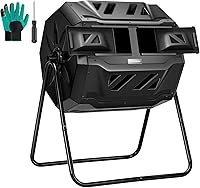
For a rotating container, check the opening and available space before buying. Our guide to dual-chamber compost tumblers explains how chamber design affects loading and turning.
How do you take a useful compost temperature reading?
Insert the probe toward the center of the compost, wait for the dial to settle, and note the temperature and location. In a large or uneven pile, take readings in more than one spot.
Use the same depth and general location for repeat checks. Note whether you recently turned or watered the pile, since those changes can affect what you observe.
Don’t use temperature as a stand-alone verdict on compost health. Dry material, poor airflow, or an uneven mix can slow activity, so check those conditions before changing the pile based on one reading.
How do you care for a compost thermometer?
Wipe the stem clean after use and store the thermometer where the dial won’t be struck or the stem bent. The models described here specify wipe-clean care.
Insert the probe into compost rather than using it to break up packed material. Use a separate tool for mixing or aerating; our guide to compost aerator tools covers options for that job.
What mistakes should you avoid when using a compost thermometer?
The most common mistake is measuring near the surface and treating that reading as the pile’s center temperature. Push the stem far enough into the compost, and take another reading elsewhere if the pile is large or uneven.
Don’t force a stem through a tight opening or against a bin wall. That makes it harder to position the probe and can put unnecessary strain on the tool.
Avoid comparing readings taken at different depths or locations as if they show a clear change over time. Keep the placement consistent, and check moisture and airflow before making a major adjustment.
Which compost thermometer should you choose?
Pick the REOTEMP 16-Inch model for a compact bin, the REOTEMP or Greenco 20-Inch model for a medium-depth setup, and the REOTEMP Backyard Pro when a deep pile needs more reach. Choose Greenco if you want both Fahrenheit and Celsius on the dial.
Skip the longest stem if your compost is shallow or the opening is tight. Before buying, measure the distance from the access point to the center and consider whether you’ll benefit from activity zones or dual-scale markings.
If you’re still deciding on the setup itself, compare worm bins and compost tumblers and review how to choose a worm composting bin. Then pick a compost thermometer whose reach fits the container you plan to use.
Frequently asked questions
How deep should a compost thermometer go?
The probe should reach the center of the material you want to measure. Match its usable stem length to the distance from the opening to the compost center, and check more than one spot if the pile is uneven or the probe cannot reach the middle.
Can you use a compost thermometer in a tumbler?
Yes, if the probe fits through an opening and reaches the compost mass without hitting the wall. Check the opening, available depth, and room to read the dial before you buy, since a long stem can be awkward in a compact tumbler.
Are analog compost thermometers accurate?
An analog dial gives a temperature reading without batteries, but useful comparisons depend on consistent placement. Insert the probe to the same depth, give the reading time to settle, and compare readings from similar spots rather than treating one check as a full picture of the pile.
Should you leave a compost thermometer in the pile?
Remove the thermometer after taking a reading unless its instructions say it can stay in place. Leaving it in the compost can get in the way when you turn or move material, and handling the pile may damage the dial or stem.