How to Use Rain Barrels to Water Grass
To use rain barrels to water grass, collect roof runoff in a screened barrel, raise it so gravity feeds a hose or add a pump, then water deeply in the early morning and keep the water off edible plants. A full 50-gallon barrel covers a small lawn patch, so plan on several barrels for a bigger yard.
On this page (8 sections)
- How do you set up a rain barrel for lawn watering?
- Why raise the barrel, and what does a stand do?
- How do you get the water from the barrel to the grass?
- How much lawn can one barrel actually water?
- When and how should you water grass with rainwater?
- Do you need a filter, and how do you keep the water clean?
- What safety and water-quality steps matter?
- Which setup fits your lawn?
To use rain barrels to water grass, collect roof runoff in a screened barrel, set it on a stable base, and run a hose or pump from the spigot to your lawn. Water deeply in the early morning, aim at the soil rather than the blades, and keep the barrel covered so mosquitoes and debris stay out.
The idea is simple: your roof sheds more water than most lawns can use in one storm, and a rain barrel catches some of it before it runs into the street. The practical parts are getting the water out, getting it to the right spot, and keeping the setup clean.
This guide walks through each step and names the gear that does the job.
How do you set up a rain barrel for lawn watering?
Start by placing the barrel where a downspout can feed it and where a hose can reach the grass. A flat, firm spot near the house is ideal, and the closer to the lawn you water, the less hose you need.
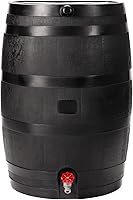
Cut the downspout above the barrel's inlet height so water flows in without backing up. The RTS barrel includes a screen to keep leaves and roof grit out of the stored water.
Check that the overflow outlet points away from the foundation. A full barrel with nowhere to send extra water will pool against the wall or soak the soil at its base.
The RTS barrel's front-side overflow is designed for exactly this, sending excess water away from the wall rather than flooding against it.
Set the barrel on level ground or a dedicated stand. A full 50-gallon barrel weighs over 400 lb, so soft ground will let it sink and tip.
Test the spigot before the first rain so you know it seals. The RTS barrel measures 18.25 inches long by 18.25 inches wide by 33.5 inches tall and weighs 22 pounds empty, so you can move it into place before the first storm fills it.
Why raise the barrel, and what does a stand do?
A stand lifts the spigot so gravity gives you better flow and a bucket fits underneath. The higher the outlet above the hose end, the stronger the pressure at the nozzle.
A stand adds height so more of the stored water actually reaches the lawn.
The barrel's flat back and cylindrical shape make it easy to seat on a round stand without wobbling.
The Rain Wizard stand fits barrels with 19 to 26 inch round bases, so measure yours before buying. Good Ideas says its structured core holds over 1,000 lb of water weight.
It is made from UV-resistant polyethylene resin, so it resists rot and fading, and its oak finish and flat-back profile let it tuck against a wall next to the barrel.
Skip a stand if your barrel already sits on a raised pad or if you plan to use a pump. A pump removes the need for gravity height, which matters when the lawn slopes uphill from the barrel.
The RTS barrel also has an optional matching stand sold separately, so you can keep the look consistent if you prefer that route.
How do you get the water from the barrel to the grass?
Use a hose on the spigot for short runs, or a transfer pump when the lawn is uphill or far away. Gravity only pushes water downhill, so a pump is the reliable choice for a sloped yard.
Attach a standard garden hose to the spigot and open the valve slowly. A hose laid downhill will siphon water out at a steady pace.
For a gentle soak, use a soaker hose or a sprinkler head on a short leader hose. The RTS barrel's shut-off valve is made for hose hookup, so you can leave a hose threaded on and just turn the valve to control flow.
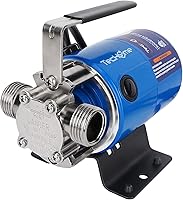
When the terrain works against you, a small transfer pump moves water fast. The VIVOSUN pump moves up to 330 gallons per hour and lifts water to a maximum height of 39 ft.
It needs water in the pump chamber before you plug it in, and it runs on a standard 115-volt outlet. It weighs 5.7 pounds and has a carrying handle, so you can move it between barrels without much effort.
Keep the pump and cord out of puddles. Run the outlet hose to the lawn before switching on, and never let the pump run dry.
Our guide to rain barrel pumps compares the options if you want more reach.
How much lawn can one barrel actually water?
A full 50-gallon barrel covers roughly 1,000 square feet of grass at about a 0.08-inch depth. That is a light soaking, and most lawns need about an inch of water a week, so one barrel is a supplement rather than a full supply.
The math is easy to run. One gallon spread over 1 square foot is about 1.6 inches deep.
Spread 50 gallons across 1,000 square feet and you get about 0.08 inch. A typical quarter-acre lawn needs well over 1,000 gallons a week in dry weather.
The RTS barrel's 50-gallon capacity is a realistic single-barrel figure, not a marketing stretch.
That is why most setups use two or more linked barrels. The RTS barrel can connect to others for more capacity through its overflow valve.
Our explainer on how much water does a rain barrel hold covers sizing for a whole lawn.
When and how should you water grass with rainwater?
Water early in the morning, before the sun is high, and aim the stream at the soil. Deep, less frequent soakings build deeper roots than light daily sprinkling.
Let the top inch of soil dry between waterings. Grass that gets a deep soak once or twice a week usually does better than grass watered a little every day.
A rain gauge or a simple finger test in the soil tells you when to water again.
Don't water in the heat of midday. Much of the water evaporates before it reaches the roots, and wet blades left overnight can invite fungus.
Morning watering lets the grass dry before evening.
Watch the forecast before you empty a full barrel onto the lawn. If rain is coming in a day or two, hold the water for the next dry stretch.
Stored water stays useful for weeks if the barrel is covered. A full barrel left sitting is also a reserve for the first hot, dry week after a wet spell, which is often when lawns need water most.
Do you need a filter, and how do you keep the water clean?
A screen over the inlet is the basic filter, and it keeps leaves and grit out of the spigot. Roof runoff also carries dust, pollen and bird droppings, so a cleaner barrel means cleaner water.
The screen on the RTS barrel stops large debris. For finer filtration, a mesh or fabric filter over the inlet catches more.
Our guide to the rain barrel filter covers the choices and when a finer mesh helps.
What does routine barrel care look like?
Empty and rinse the barrel at the start of the season. Standing water left through winter can grow algae and smell.
A closed lid and a fine screen also cut down on mosquito breeding. Flush the spigot and hose with a short run of water before the first lawn watering, so any sediment that settled over the off season drains out first.
For a full cleaning routine, read how to clean rain barrel water.
What safety and water-quality steps matter?
Rain barrel water is fine for an established lawn but not for drinking or for vegetables you eat raw. Roof runoff can pick up pollutants from shingles, gutters and animal waste.
Let the water settle before using it so grit stays at the bottom. Avoid drawing from the very bottom of the barrel where sediment collects.
Water bare soil and grass, and keep the stream off play equipment. The RTS barrel's screen helps keep debris out at the source, but it does not make the water potable.
Don't let a full barrel overflow against the foundation. Route the overflow to a garden bed or a drain away from the house.
Drain and store the barrel before temperatures hit freezing, as RTS recommends, so trapped water doesn't crack it. The one-year manufacturer warranty covers parts, so a cracked barrel from winter ice is a problem worth preventing.
Which setup fits your lawn?
For most yards, the RTS 50-gallon barrel on the RTS matching stand, with a hose run downhill, covers the basics. Add the VIVOSUN pump when your lawn sits uphill or the hose run is long.
Pick the RTS barrel for a flat-back design that tucks against the wall. Choose the RTS matching stand if you want easier bucket filling and stronger gravity flow.
Add the pump for uphill watering or fast draining.
Once your rain barrels are watering the grass, the setup pays back over a few dry seasons. Start with one barrel and a stand, then link a second barrel when you see how fast your lawn drinks.
For more on storing and using rainwater around the yard, browse our rain barrels section.
Frequently asked questions
How long does a 50-gallon rain barrel last on a lawn?
A full 50-gallon barrel waters about 1,000 square feet of grass at about a 0.08-inch depth. That is roughly 8 to 10 minutes with a standard hose at full flow.
Most lawns need more than that per week, so expect to refill from rain or top up between storms.
Is rainwater better for grass than tap water?
Rainwater is free of the chlorine and minerals in many municipal supplies, and it arrives at a temperature close to the soil. That makes it a gentle option for lawns.
It is not a fertilizer, though, so grass still needs feeding and proper mowing.
Can I leave a rain barrel hose connected all the time?
You can leave a hose connected to the spigot, but close the valve when the barrel is not in use. Standing water in a hose left in the sun can grow algae.
Disconnect and drain the hose before freezing weather so trapped water does not split it.
How do I stop mosquitoes breeding in rain barrel water?
Fit a fine screen over the inlet and keep the barrel lid sealed. Empty any standing water in trays and hoses.
A mosquito dunk approved for water features can be added if larvae appear.
Screens and closed lids are the first line of defense.
Can rain barrel water make my grass sick?
Rain barrel water is generally fine for an established lawn. Roof runoff can carry bird droppings, dust and pollutants from shingles.
Let the water settle, avoid using it on bare soil where children play, and never drink it or use it on vegetables you eat raw.
Does a rain barrel need to sit on a stand?
A stand is not required, but raising the barrel improves pressure and makes filling a watering can or bucket easier. A stand also keeps the spigot clear of mud and splashes.
Pick one rated for the weight of a full barrel.