How Much Water Does a Rain Barrel Hold?
A rain barrel usually holds about 50 gallons, though common models range from around 40 to 100 gallons. The usable amount depends on its rated capacity, current fill level, and how much roof runoff reaches it.
On this page (7 sections)
A rain barrel usually holds about 50 gallons, though common models range from around 40 to 100 gallons. The usable amount depends on its rated capacity, current fill level, and how much roof runoff reaches it.
A barrel's capacity tells you its maximum storage, not how much water your roof will deliver in a storm. For many homes, even a short period of rain can fill one, so overflow planning matters as much as the gallon number.
How much water does a typical rain barrel hold?
A typical home rain barrel holds about 50 gallons. Smaller containers may suit limited spaces, while larger barrels store more water between rains.
Capacity is usually given in gallons. A 50-gallon barrel holds 50 gallons when filled to its rated level, but it may hold less if the inlet, outlet, or overflow design keeps water below the rim.
The RTS ECO holds 50 gallons and has a flat back that can sit against a wall or fence. The Step2 Lakewood holds 60 gallons and includes a stand, while the Laspeiraux collapsible barrel holds 53 gallons.
Check the space around the downspout and the ground beneath it before choosing a size. A full barrel is heavy, so place it on a firm, level base.
How much roof runoff can fill a barrel?
One inch of rain on 1,000 square feet of roof can produce about 600 gallons of runoff before losses. That means a 50-gallon barrel can fill well before all the rain has passed.
A useful estimate is:
Roof area in square feet × rainfall in inches × 0.6 = approximate gallons of runoff
For example, 500 square feet of roof and 1 inch of rain could yield about 300 gallons before accounting for water lost to wet surfaces, leaks, or collection inefficiency. A barrel captures only the amount routed to it, and it stops storing water when full.
The estimate helps explain why a small barrel can overflow during a steady storm. Read where a rain barrel overflow should go before connecting a downspout.
Does the roof size change how fast a rain barrel fills?
Yes, a larger roof area generally sends more runoff to the same barrel. Rainfall depth matters too: twice as much rain can produce roughly twice the runoff, if other conditions are similar.
The roof area contributing water is often the horizontal roof section feeding the downspout, not the entire roof. If several downspouts serve separate roof sections, one barrel may receive only a portion of the home's runoff.
Gutter condition, screens, downspout routing, and splashing can affect how much reaches the barrel. Treat the formula as an estimate rather than a promise of exact capture.
How do you choose a rain barrel capacity?
Choose a capacity that balances storage needs, available space, and the amount of runoff you can collect. A larger barrel is useful only if you can place it securely and manage overflow.
A 50-gallon model is a common starting point for a home garden. Consider a 60-gallon model if you have room for its larger footprint and want more storage in one container.
For tight spaces, the RTS ECO's flat back is designed to fit snugly against walls or fences. For a container that can fold for storage, the Laspeiraux is collapsible.
The Step2 Lakewood holds 60 gallons and has a raised design that improves water pressure and makes filling a watering can easier.
For a closer look at the RTS ECO's shape and features, see our guide to flat-back rain barrels. If you want to raise a separate barrel, compare rain barrel stands for 50-gallon barrels.
Is a bigger barrel always better?
A bigger barrel stores more water, but it also needs more ground space and a suitable base. Choose based on how much you can use between storms, not capacity alone.
A 60-gallon barrel adds 10 gallons over a 50-gallon model. That difference may help during a dry stretch, but it won't matter much if the barrel stays full and overflows after each storm.
If one barrel fills too quickly, connecting another can add storage. Read how to connect two rain barrels side by side and plan the overflow path before installation.
How do you estimate how many gallons you need?
Estimate how much water you use, then compare that amount with the barrel's capacity. A short watering log can show whether one barrel is enough.
Note how often you water and how many watering cans or containers you use. Multiply the amount used per watering session by the number of sessions you want to cover between rain events.
For example, if your garden uses 10 gallons per session and you want enough for 4 sessions, plan for about 40 gallons of usable stored water. Leave room for the barrel to refill and account for water you cannot draw from the very bottom.
A rain barrel is most useful when demand and rainfall are spread out. It is not a large reserve for long dry periods unless you have several barrels or another water source.
How much does a full rain barrel weigh?
Water weighs about 8.34 pounds per gallon, so a full 50-gallon barrel contains about 417 pounds of water. A 60-gallon barrel contains about 500 pounds of water, before adding the container's weight.
This is why the base matters. Set the barrel on a stable, level surface that can support its full weight, and avoid placing it where it could tip, shift, or block a walkway.
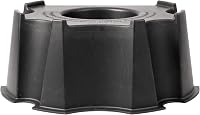
The Step2 Lakewood 60-Gallon Barrel with Stand includes a raised design. For a separate barrel, see whether a rain barrel needs to be raised.
Don't plan to move a filled barrel. Drain it first if you need to relocate it.
What happens when a rain barrel is full?
Once a barrel reaches capacity, incoming water needs a safe overflow route. Direct it away from the home's foundation and areas where water can pool.
Some barrels have an overflow valve or kit. The RTS ECO has a built-in overflow valve, and the Laspeiraux has a mesh top that helps keep leaves and debris out.
Before connecting a barrel, decide where excess water will go during heavy rain. Our guide to rain barrel overflow placement covers practical routing options.
A screen or filter can help keep debris out of stored water. See whether a rain barrel needs a filter if leaves or roof debris are a concern.
Which rain barrel capacity should you choose?
For most home gardens, start with a 50-gallon barrel and check how quickly it fills and how long your stored water lasts. Choose 60 gallons if you have space and want more water in one container, or a collapsible 53-gallon model if storage and transport matter.
Capacity works best as part of a complete setup. Plan the base, downspout connection, and overflow route before installation; how to install a rain barrel on a downspout walks through the setup.
If a single barrel fills quickly, add storage with a connected barrel. If it rarely fills or takes up too much space, a smaller capacity may fit your yard better.
Frequently asked questions
How many gallons does a standard rain barrel hold?
Many home rain barrels hold about 50 gallons, though capacity varies by model. Check the stated capacity before choosing one, then consider how quickly your roof can refill it and whether you have room for a second barrel.
A larger container stores more water but also takes up more space.
How much rain fills a 50-gallon rain barrel?
A 50-gallon barrel needs 50 gallons of captured runoff to fill from empty. About 1 inch of rain on 1,000 square feet of roof can produce roughly 600 gallons before losses, so a small barrel may fill during a moderate storm.
Actual capture depends on roof area, gutters, and runoff losses.
Can one rain barrel fill from a small roof?
Yes. Even a small roof can send substantial runoff to a barrel during steady rain, though the amount depends on the roof's area and collection setup.
A downspout diverter directs water into the barrel, while an overflow route carries away water once it is full.
Is a 50-gallon rain barrel enough for a garden?
A 50-gallon barrel can provide stored water for a small garden, but how long it lasts depends on plant needs, weather, and how often you water. Track your use for a few dry days.
If you run out quickly, consider adding a connected barrel or choosing a larger capacity.