9 Best Composting Worms to Start a Worm Bin (October 2026)
The best worms for composting include the Uncle Jim's 1000 Red Wigglers for new bin owners, the Uncle Jim's 250 Red Wigglers for compact setups, and the Uncle Jim's 250 Super Red Nightcrawlers for larger scraps.
On this page (8 sections)
- How to choose composting worms for your bin
- Which composting worms fit each kind of bin?
- How many composting worms should you buy?
- Are red wigglers or European nightcrawlers better?
- How do you set up a bin for composting worms?
- What should you feed composting worms?
- What common worm bin mistakes should you avoid?
- Which composting worms should you choose?
The best composting worms for most new home bins are red wigglers, and Uncle Jim's 1000 Red Wigglers is our top pick for a clear, middle-size starting quantity. Choose 250 for a smaller bin, or consider European nightcrawlers if you expect to add larger scraps or tougher material.
A worm bin needs the right match between worms, bedding, food and space. A larger shipment does not solve an undersized or unprepared bin, so set up the home first and choose a quantity you can support.
For a complete overview of worm composting at home, start with the bin style and care routine. If you're still choosing equipment, see our guide to selecting a worm composting bin.
Our picks at a glance
-
1
-
2

-
3

- 4
 Best for high-volume binsCheck it
- 5
 Check it
Uncle Jim's 2 lb Super Red Nightcrawlers
Best for tougher yard waste - 6
 Check it
Live Redworms 1,200 Red Wigglers
Best for a 1,200-count start - 7
 Best for weight shoppersCheck it
- 8
 Check it
NaturesGoodGuys 1,200 Red Worms
Best for bedding instructions - 9
 Check it
HomeGrownWorms 1 lb Red Wigglers
Best for included care notes
How to choose composting worms for your bin
Choose the worm type first, then size the order to your bin and the scraps you can add steadily. Red wigglers suit the most common home vermicomposting setup, while European nightcrawlers are a useful alternative when larger pieces or tougher material are part of the plan.
Count-based packs make it easier to compare a starting quantity. A 250-count option keeps the first order modest; 1,000 to 1,200 worms suits a more substantial home bin; and 2,000 calls for more space, bedding and food.
Weight-based packs can still work, but the number of worms is less clear unless the brand states an approximate count.
Think about your household's routine as well as the bin's dimensions. A household that adds scraps only now and then may not need a large shipment, while a steady supply of plant-based kitchen scraps gives a larger population more to work with.
Don't choose by count alone: a prepared bin and consistent care matter more than ordering the most worms.
| Product | Best for | Type | Quantity | Use | Our score |
|---|---|---|---|---|---|
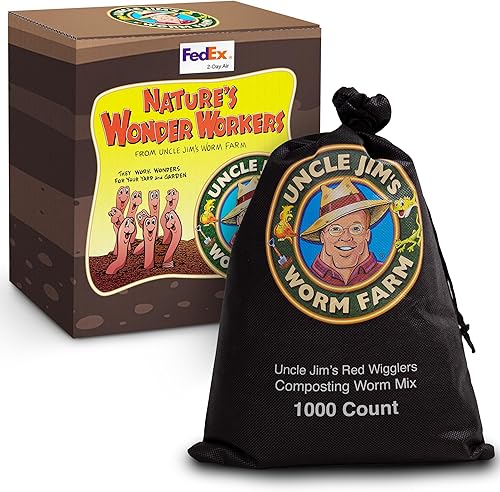
| Uncle Jim's 1000 Red Wigglers | new bin owners | Red wigglers | 1,000 worms | Composting and garden soil | 8.9 |
| Uncle Jim's 250 Red Wigglers | compact setups | Red wigglers | 250 worms | Composting and fishing | 8.4 |
| Uncle Jim's 250 Super Red Nightcrawlers | larger scraps | European nightcrawlers | 250 worms | Composting and garden soil aeration | 8.2 |
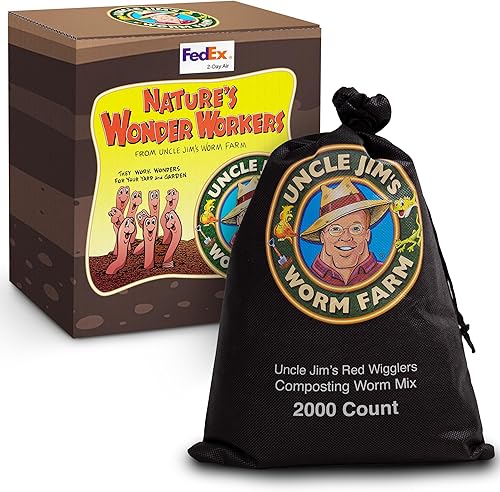
| Uncle Jim's 2000 Red Wigglers | high-volume bins | Red wigglers | 2,000 worms | Composting and outdoor gardening | 8.0 |
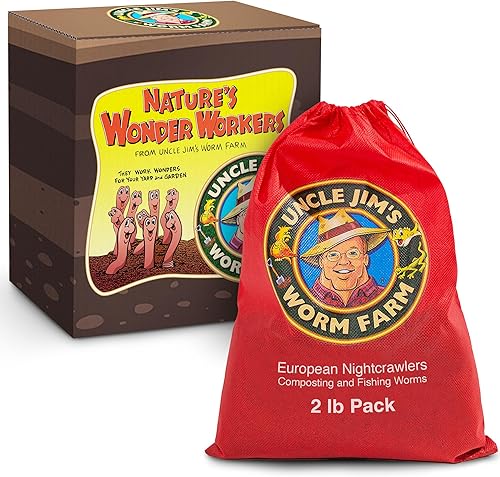
| Uncle Jim's 2 lb Super Red Nightcrawlers | tougher yard waste | European nightcrawlers | About 650 worms per pound | 7.9 | |
| Live Redworms 1,200 Red Wigglers | a 1,200-count start | Red wigglers | 1,200 worms | Composting and soil | 7.7 |
| WWJD Worms 1 lb Red Wigglers | weight shoppers | Red wigglers | Composting and gardening | 7.5 | |
| NaturesGoodGuys 1,200 Red Worms | bedding instructions | Red wigglers | 1,200 worms | Worm bins and garden soil | 7.2 |
| HomeGrownWorms 1 lb Red Wigglers | included care notes | Red wigglers | Composting bins and garden | 6.8 |
Which composting worms fit each kind of bin?
Red wigglers are the practical default for most home bins, and European nightcrawlers fit a more specific need for larger worms. Within either group, choose a pack that matches the bin's space and the amount of suitable food you can offer.
Uncle Jim's 1000 Red Wigglers: best for new bin owners
Uncle Jim's 1000 Red Wigglers: Best for new bin owners
- 1,000-count pack
- Red wigglers
- Harvested from decades-old worm beds
A count-based red wiggler pack for a prepared home bin. Uncle Jim's says its worms come from established beds that may include different earthworm species.
Pros
- Useful starting quantity
- Red wigglers suit composting bins
- Can also be used for garden soil
Cons
- May contain different earthworm species
- Choose a smaller pack if your bin is very small
Uncle Jim's 1000 Red Wigglers is our top pick because the count is easy to plan around and the red wiggler type fits a standard composting setup. Uncle Jim's describes its worms as coming from established beds that may include different earthworm species.
That mixed origin may suit buyers who are comfortable with a varied population. Choose another option if you need a single-species culture or a precisely controlled worm population, since this pack is not described that way.
The 1,000-count pack sits between a small trial order and a larger shipment. Prepare damp bedding and a steady food source first, then add scraps gradually so the worms can settle in before you increase feeding.
Choose it for a prepared home bin with regular kitchen scraps. If you want a smaller first shipment, the 250-count pack below is easier to scale around a compact setup.
Uncle Jim's 250 Red Wigglers: best for compact setups
Uncle Jim's 250 Red Wigglers: Best for compact setups
- 250-count pack
- Red wigglers
- Composting and fishing use
The smallest-count red wiggler option here gives a new bin a modest start. It may suit a compact setup better than ordering a larger pack before you know how much food waste you'll add.
Pros
- Smallest stated count in this roundup
- Red wigglers for composting
- Dual-purpose use
Cons
- May be too few for a larger bin
- Pack quantity is smaller than the other red wiggler choices
A 250-count pack gives a new or compact bin a smaller start than the 1,000- and 2,000-count options. It contains red wigglers and is described for composting as well as fishing.
The smaller quantity can help you avoid placing more worms in a bin than its bedding and food supply can support. You'll still need airflow, suitable damp bedding and a feeding pace that matches what the worms can process.
Uncle Jim's describes these worms as coming from older beds that may contain different earthworm species. That detail is shared with its larger red wiggler packs, so the main reason to choose this one is its modest count.
Pick it if you want to start slowly and learn the bin's rhythm. Skip it if your bin is large and ready for a larger population from the start.
Uncle Jim's 250 Super Red Nightcrawlers: best for larger scraps
Uncle Jim's 250 Super Red Nightcrawlers: Best for larger scraps
- 250 European nightcrawlers
- Described as 2–5 times larger than normal red worms
- Composting and garden soil use
European nightcrawlers are a distinct option for bins that receive less-broken-down food. Uncle Jim's describes these worms as larger than normal red worms and notes they also suit fishing.
Pros
- Larger than normal red worms, according to Uncle Jim's
- Composting and garden soil uses
- Count is stated
Cons
- A different choice from the common red wiggler starter
- The pack is smaller than the 2 lb option
European nightcrawlers offer a different choice from red wigglers. Uncle Jim's describes these Super Reds as larger than normal red worms and suitable for composting, garden soil aeration and fishing.
This type may fit a bin that gets larger food pieces or less-broken-down material. The larger size is a reason to consider them, but it doesn't remove the need to prepare scraps and add them in amounts the bin can handle.
This 250-count pack is a measured way to try nightcrawlers instead of starting with a 2 lb order. European nightcrawlers are smaller than the larger Canadian and African nightcrawler varieties, so don't read the name as a promise of the largest worm available.
Choose these when the larger worm type matches your materials. If your bin mainly takes small kitchen scraps, red wigglers remain the simpler default.
Uncle Jim's 2000 Red Wigglers: best for high-volume bins
Uncle Jim's 2000 Red Wigglers: Best for high-volume bins
- 2,000-count pack
- Red wigglers
- Composting and outdoor gardening use
The largest stated red wiggler count in this group fits buyers who already have a larger bin or plan to add more organic material. A high count is less useful if the bin cannot support it.
Pros
- Largest stated red wiggler quantity here
- Useful for a larger setup
- Can be used for outdoor gardening
Cons
- May be more than a small bin needs
- Requires enough suitable bedding and food
The 2,000-count option suits a larger bin that's already prepared and has a steady supply of suitable scraps. Its red wigglers are described for composting and outdoor gardening.
A larger count can be useful when you have more bedding volume and organic material to process, but quantity alone doesn't determine how quickly a bin works. Moisture, airflow, temperature and feeding habits all affect whether worms settle in well.
This pack is a bigger commitment than the 250- or 1,000-count choices. Plan the bin first, especially if you're new to vermicomposting.
Buy this size when your bin and food supply can support it. Skip it for a small first bin or an irregular supply of scraps.
Uncle Jim's 2 lb Super Red Nightcrawlers: best for tougher yard waste
Uncle Jim's 2 lb Super Red Nightcrawlers: Best for tougher yard waste
- 2 lb pack
- About 650 worms per pound
- Larger food and tougher material use
This larger pack is aimed at buyers who want nightcrawlers for tougher material or larger food pieces. The stated count is approximate, so compare the weight-based pack with your bin's capacity.
Pros
- 2 lb pack
- About 650 worms per pound
- Described for leaves and tougher material
Cons
- Weight-based quantity is approximate
- May be excessive for a compact bin
This 2 lb pack is the larger nightcrawler choice for buyers who want worms for larger food pieces, leaves or tougher material. Uncle Jim's gives an approximate count of 650 worms per pound, so the total is weight-based rather than exact.
The brand describes these worms as 3 to 8 inches long and larger than red wigglers. That size and pack format make this a specialized choice for a roomy setup, rather than the default order for a compact starter bin.
Choose this pack after checking the volume of your bin and the material you plan to add. A large shipment needs enough bedding and food, so skip it if you haven't established a feeding routine yet.
Consider it when you specifically want a larger nightcrawler order. For a smaller trial, the 250-count European nightcrawler option is more contained.
Live Redworms 1,200 Red Wigglers: best for a 1,200-count start
Live Redworms 1,200 Red Wigglers: Best for a 1,200-count start
- 1,200 red wigglers
- Composting red worms
- Also described for soil use
A stated count of 1,200 lands close to the common 1,000-worm starting range. NaturesGoodGuys describes these red worms as turning organic waste into nutrient-rich soil.
Pros
- Clear count of 1,200
- Red worms for composting
- Brand describes soil use
Cons
- No bedding details in the product information
- Check bin capacity before choosing this count
NaturesGoodGuys offers 1,200 red wigglers, close to the common 1,000-count starting range. The brand describes them as turning organic waste into nutrient-rich soil.
This is a count-based alternative if you want red worms for a composting bin. Prepare bedding and start with modest food additions so the new population can settle in before you add more.
The product details also describe these worms for soil use. For a bin-focused setup, the stated quantity and red wiggler type are the clearest reasons to consider this option.
Choose it if a count slightly above 1,000 suits your bin. Compare it with Uncle Jim's 1,000-count pack if you prefer that brand's stated mixed worm-bed source.
WWJD Worms 1 lb Red Wigglers: best for weight shoppers
WWJD Worms 1 lb Red Wigglers: Best for weight shoppers
- 1 lb pack
- Red wigglers
- For home composting and gardening
This option gives you a weight-based pack rather than a stated worm count. WWJD describes its worms for home composting, worm bins and garden use.
Pros
- Weight is stated
- Red wigglers for composting
- Brand describes home and garden uses
Cons
- No worm count is stated
- Compare by bin capacity rather than pack weight alone
WWJD Worms sells red wigglers in a 1 lb pack and describes them for home composting and gardening. The pack doesn't give a worm count, so it's harder to compare directly with count-based choices.
Weight can still be useful if you already know what your bin can support. If a specific number matters, get clarification before ordering; otherwise, match the weight-based pack to your bin and your feeding routine.
WWJD also describes the worms for worm bins and raised beds. The tradeoff is simple: you get a stated weight, not a stated number of worms.
Pick it if you're comfortable buying by weight. New bin owners who want a clear count may prefer one of the 250-, 1,000- or 1,200-count packs.
NaturesGoodGuys 1,200 Red Worms: best for bedding instructions
NaturesGoodGuys 1,200 Red Worms: Best for bedding instructions
- 1,200 red worms
- Composting and garden use
- Care instructions described
This 1,200-count option is another red worm choice for a bin or garden. NaturesGoodGuys describes using shredded paper, cardboard or leaves as bedding before adding food scraps.
Pros
- Count is stated
- Bin bedding guidance is described
- Can be used in a worm bin or garden
Cons
- Keep worms from drying out
- The stated care temperature is 50°F or warmer
This NaturesGoodGuys option states a count of 1,200 red worms and includes guidance for vermicomposting in a ventilated bin. It describes shredded paper, cardboard or leaves as bedding, followed by food scraps.
That setup advice helps a new owner think through the bin before the worms arrive. The care notes say to keep worms from drying out and describe storage at 50°F or warmer for no longer than 30 days.
Plan to use the worms soon after delivery and have the bin ready for them. This is a close alternative to the other 1,200-count red wiggler choice, with the described care guidance as a useful distinction.
Choose it if the bedding instructions help you prepare. If you want a smaller quantity, Uncle Jim's 250 Red Wigglers is a more modest start.
HomeGrownWorms 1 lb Red Wigglers: best for included care notes
HomeGrownWorms 1 lb Red Wigglers: Best for included care notes
- 1 lb pack
- Red wigglers for composting
- Includes a care and maintenance sheet
This weight-based red wiggler pack comes with a care and maintenance sheet, according to HomeGrownWorms. Its stated delivery promise is a replacement if the worms do not arrive alive.
Pros
- Includes care and maintenance sheet
- Red wigglers for bins and gardens
- Brand describes indoor processing and packaging
Cons
- No exact worm count is stated
- Compare pack weight with the size of your bin
HomeGrownWorms offers a 1 lb pack of red wigglers with a care and maintenance sheet. The brand describes the worms for compost bins and gardens, but doesn't state an exact count.
Its product information also describes indoor processing and packaging and says it replaces an order if the worms don't arrive alive. If that promise matters, check the terms before ordering so you understand what qualifies.
A care sheet can help if this is your first bin, but it doesn't replace a prepared home and a measured feeding routine. The main drawback is the missing count, which makes it harder to compare with count-based packs.
Choose it if written care guidance matters more than a precise count. Skip it if you need to plan a bin around a specific number of worms.
How many composting worms should you buy?
A 250-count pack is a modest start for a smaller bin, while about 1,000 worms suits a more substantial home setup with regular scraps. Consider 2,000 only when the bin has enough bedding volume and food to support a larger population.
There isn't one count that fits every bin because containers vary in usable space and owners add different amounts of food. Set up the bin first, then choose a pack based on its capacity and your expected scraps.
Avoid treating worm count as a shortcut to faster composting. A large population in a bin with little food or poor bedding has no advantage over a smaller group in a well-managed setup.
Give the worms room, moisture and food before scaling up.
If you're still comparing containers, our worm bin guide covers the basics. You can also read how to choose a worm bin before deciding on a worm quantity.
Are red wigglers or European nightcrawlers better?
Red wigglers are the direct choice for a typical home composting bin, while European nightcrawlers are worth considering for larger scraps and tougher material. The right type depends on what you'll feed and how your bin is set up.
The two choices have different size profiles and aren't interchangeable just because both can process organic material. Read our red wigglers vs European nightcrawlers guide for a closer comparison.
For most beginners, the species question can wait until after the basics: a ventilated container, damp bedding and a steady but modest food supply. If you plan to keep the bin indoors, our indoor worm composter guide explains what to consider in a smaller living space.
How do you set up a bin for composting worms?
Prepare a ventilated bin, damp bedding and a small amount of food before the worms arrive. Shredded paper, cardboard or leaves can provide bedding, and the bin should stay moist without becoming waterlogged.
Spread the bedding so the worms have a place to move through, then add a modest amount of food beneath it. Give the scraps time to break down before adding more; a pile of uneaten food is a sign to slow down.
Keep the bin out of conditions that dry it out or expose it to harsh heat or cold. If you're unsure about the first steps, follow our step-by-step guide to starting a worm bin.
What should you feed composting worms?
Feed suitable plant-based scraps in small amounts, then wait to see how quickly the bin processes them. Adding more food before the last batch has broken down can leave scraps sitting in the bin and make care harder.
Chop or break up larger pieces when practical, and bury food under bedding to reduce exposed scraps. If the bin smells or attracts flies, remove excess food and review the feeding amount and moisture before adding anything else.
For a fuller list of suitable scraps and items to skip, see what to feed composting worms. A measured routine helps you learn what your own bin can process.
What common worm bin mistakes should you avoid?
The most common mistakes are adding too much food, letting bedding dry out or turn soggy, and buying more worms than the bin can support. Each one is easier to prevent by preparing the setup and making small changes as you learn the bin's pace.
A bin that smells bad or draws fruit flies often needs less food and better attention to its bedding conditions. Don't respond by adding more worms; first remove excess scraps and check airflow and moisture.
Our guide to worm bin smells and fruit flies gives practical fixes.
Another avoidable problem is ordering live worms before the bin is ready. Have bedding, a protected location and an initial feeding plan in place, then unpack and introduce the worms according to the care guidance for your chosen pack.
Which composting worms should you choose?
Choose Uncle Jim's 1000 Red Wigglers for a balanced count and a familiar red wiggler starting point. Choose the 250-count pack for a smaller bin, the 2,000-count pack for a larger prepared setup, or European nightcrawlers when their size and tougher-material use fit your plans.
If you want a clear count from another brand, the 1,200-count red wiggler options are close alternatives. If you're comfortable buying by weight, compare the 1 lb packs with your bin capacity and ask for a count when that affects your setup.
Once you've chosen, match the bin and feeding plan to the worms. Use our guides to starting a worm bin and feeding composting worms to prepare the next steps.
Our top 3 picks at a glance
-
1
-
2
-
3
Frequently asked questions
What are the best composting worms for beginners?
Red wigglers are a common starting choice for a home worm bin, and a pack around 1,000 gives you a clear count to plan around. Choose fewer for a compact bin, then match food scraps and bedding to the number of worms.
European nightcrawlers are another option when your bin gets larger pieces or tougher material.
How many composting worms should I start with?
Start with a quantity that fits your bin and the food scraps you can add regularly. A 250-count pack suits a smaller start, while 1,000 or more may make sense for a larger bin with steady material.
Avoid buying a large pack if the bin is not ready with suitable bedding.
Are red wigglers or European nightcrawlers better for composting?
Red wigglers are the straightforward choice for a typical home composting bin. European nightcrawlers are larger, and Uncle Jim's describes them as useful for larger food pieces and tougher material.
Compare the two types in our red wigglers vs European nightcrawlers guide.
What should I prepare before composting worms arrive?
Prepare a ventilated bin with damp bedding such as shredded paper, cardboard or leaves, then add food scraps in modest amounts. Give the worms a shaded place away from drying conditions and check the bin before adding more food.
Our step-by-step worm bin setup guide walks through the first setup.


