Which Rain Barrel Material Is Best?
The best rain barrel material for most yards is UV-resistant polyethylene, because it resists rot, handles freezing better than wood or thin metal, and costs less than a decorative barrel. Pick wood or metal only when the look matters more than upkeep.
On this page (11 sections)
- What makes one rain barrel material better than another?
- Is UV-resistant polyethylene the best rain barrel material?
- How does wood hold up as a rain barrel material?
- Is metal a good rain barrel material?
- What about resin and composite barrels?
- Which material suits your climate and yard?
- Do you want a ready-made barrel or a DIY build?
- How do the main materials compare side by side?
- Which barrels fit each material choice?
- How should you set up and care for a rain barrel?
- Which rain barrel material should you buy?
The best rain barrel material for most yards is UV-resistant polyethylene. It shrugs off rain and sun, resists rot, weighs far less than wood or metal and costs less than either.
Wood and metal barrels have real fans, and they earn a place in certain gardens. The right answer depends on your climate, your budget and how much upkeep you'll accept.
This guide compares the main materials by durability, weight and yard conditions. It also names the product we'd buy for most readers and for a few specific situations.
If you're still sizing your setup, our guide on how much water does a rain barrel hold covers capacity first.
What makes one rain barrel material better than another?
The best material for your yard balances weather resistance, weight and upkeep. A barrel that rots or cracks after a few seasons costs more than one that simply keeps working.
Five traits decide most of the comparison.
- Sun resistance. UV light breaks down many plastics and fades wood finishes. Look for UV-resistant polyethylene or a coated metal.
- Moisture and rot. Wood needs to stay damp enough to swell but not so wet it rots. Metal needs intact coating to stop rust.
- Weight. Empty barrels must move into place and stand steady when full. A 50-gallon barrel holds hundreds of pounds of water once filled.
- Repair. Plastic can often be patched; wood needs refinishing and metal needs touch-up paint.
- Look. Wood and metal blend into traditional gardens; textured plastic now mimics both.
Match these traits to your climate first. A material that wins in a dry, mild yard can lose in a wet, freezing one.
Pick UV-resistant polyethylene if you want low upkeep and good freeze tolerance.
Is UV-resistant polyethylene the best rain barrel material?
Yes, for most readers UV-resistant polyethylene is the best rain barrel material. It resists rot and rust, costs less than wood or metal and tolerates freezing better than brittle materials.
Polyethylene is the plastic used in most modern barrels. RTS Home Accents, for example, makes its ECO barrel from UV-resistant polyethylene and says it is 100% recycled plastic.
That recycled build matters if you want a lower-impact product. The material also stays lighter than wood or steel.
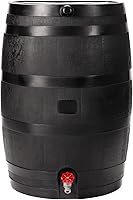
Textured finishes now imitate wood grain and stone. RTS molds an oak texture into one of its plastic barrels so the look won't fade or rot.
Flat-back shapes are another plastic advantage. RTS barrels with a flat back sit snug against a wall or fence, which helps in tight side yards.
Dark colors like black block light and slow algae growth inside the barrel. Plastic is also easy to drill or fit with a spigot and overflow valve.
The main trade-offs are heat and thin walls. Very hot sun can degrade cheap plastic over time, so UV resistance matters.
Cheap thin barrels can bow when full.
Choose UV-resistant polyethylene for the lowest-maintenance barrel that handles sun, rain and winter drain-down.
How does wood hold up as a rain barrel material?
Wood is durable only when kept wet and sealed, so it needs more attention than plastic. It looks the best in traditional gardens and can last for years with the right care.
Real wooden barrels are built from staves held by metal hoops. They're charming beside a cottage or a formal border, and the look only improves with age.
The catch is moisture. Wood staves swell when wet and shrink when dry.
A barrel left empty in summer can open gaps, and one kept too wet in shade can rot.
You'll need to keep the barrel reasonably full in dry spells and treat the wood with a safe finish. Metal hoops also rust over time.
Wood also weighs more empty than a comparable plastic barrel. Moving one into a tight corner takes more than one pair of hands.
Look is the main argument for wood. If you want that rustic grain without the upkeep, a woodgrain plastic barrel gives a similar appearance with less care.
Pick wood only if you'll commit to keeping it wet and sealed; otherwise choose woodgrain plastic.
Is metal a good rain barrel material?
Metal barrels look sharp and last well when the coating stays intact. They suit modern and farmhouse gardens, but chips and scratches let rust start.
Two metals dominate. Steel barrels are usually galvanized or powder-coated.
Aluminum barrels are lighter and won't rust, though they dent more easily.
Steel's weak points are seams, rims and the base, where water sits and the coating wears. Inspect these spots each season and touch up chips with paint made for the finish.
Aluminum avoids rust but reacts with acidic rainwater over time. A food-grade liner or a plastic inner barrel solves that, though it adds cost and complexity.
Metal also gets hot in direct sun. In a warm climate the water inside can warm up more than in thick plastic.
Weight is moderate. A steel barrel sits between a light plastic model and a heavy wooden one.
Choose metal when the look matters and you'll maintain the finish; skip it in salty coastal air unless the maker approves the coating.
What about resin and composite barrels?
Resin and composite barrels behave much like thick polyethylene and are a strong all-round choice. The names overlap in the market, so treat them as a sturdier plastic family.
RTS Home Accents calls its Premium 55-gallon barrel a durable, UV-resistant resin build. It looks like woodgrain with black stripes and has a removable lid.
The thicker shell adds weight. This barrel weighs about 28 pounds empty, against roughly 18 pounds for the 50-gallon ECO model.
That extra heft helps it stay put in wind. The removable lid also makes cleaning easier, which matters for any barrel that sees leaves and grit.
Resin barrels usually cost more than plain plastic. You pay for the decorative finish and the heavier build.
Composite barrels can also use recycled content. Check the maker's description if recycled material matters to you.
Pick resin or composite when you want plastic's low upkeep with a heavier, more decorative shell.
Which material suits your climate and yard?
Your climate decides more than your taste does. A barrel that excels in a mild, dry yard can fail in a freezing or wet one.
Cold winters
Freezing water expands and can split a full barrel. Polyethylene flexes more than wood or thin metal.
Drain and disconnect the barrel before temperatures approach freezing. Store it upside down or indoors if the maker recommends it.
Wood shrinks in cold, dry air, which opens staves. Metal seams and bases are the spots most likely to crack.
Pick UV-resistant polyethylene for cold winters, and always drain it before the first hard freeze.
Hot, sunny climates
Sun does the most damage to plastic and wood finishes. Dark colors also heat the water.
Choose a barrel with UV-resistant walls and, ideally, a light color to reflect heat. Wood needs frequent refinishing in strong sun.
Metal gets hot but holds up if the coating stays intact. Keep the barrel out of the hottest afternoon sun where you can.
Pick a UV-resistant light-colored plastic barrel in hot climates, and top up the finish on wood or metal.
Wet, shaded yards
Constant damp is hard on wood and on metal seams. Plastic shrugs it off.
Algae grows faster in shade and in clear or light-colored barrels. Choose an opaque, dark barrel and keep the lid and screen fitted.
Wood in permanent shade is the worst case for rot. Metal seams trap water and rust.
Pick opaque plastic in wet, shaded yards and skip wood unless you can keep it dry and sealed.
Small side yards and tight corners
Space favors flat-back barrels. These fit flush against a wall or fence and save depth.
Plastic flat-back models are the easiest to find and the lightest to slide into place. RTS makes several with that shape.
Wood barrels are round and bulkier. Metal barrels vary in shape but are rarely flat-backed.
Pick a flat-back plastic barrel for tight spots, and check the footprint before ordering.
Do you want a ready-made barrel or a DIY build?
A ready-made plastic barrel is the best material choice for most people, while DIY suits a tight budget. Building your own lets you choose the drum, but you also own the fit and finish.
Many DIY barrels start with a food-grade plastic drum. That's the same polyethylene family as store-bought barrels, so the material answer doesn't change.
The differences are in the fittings. A DIY build means drilling the inlet, overflow and spigot yourself.
A leak there is your problem to fix.
Store-bought barrels arrive with those parts fitted and tested by the maker. They also carry a warranty, and RTS backs its barrels with a one-year warranty.
If you enjoy the build and have a cheap drum source, DIY can save money. If you want it to work the first time, buy a finished barrel.
Our guide on rain barrel diy compares the two routes in detail.
Pick store-bought plastic for reliability; choose DIY only if you have a good drum and enjoy the work.
How do the main materials compare side by side?
Plastic wins on upkeep, wood wins on looks and metal wins on lifespan with care. Use the table to match a material to your priorities.
| Material | Weather resistance | Empty weight | Upkeep | Best for |
|---|---|---|---|---|
| UV-resistant polyethylene | High, resists rot and rust | Light | Low | Most yards |
| Wood | Good when kept wet and sealed | Heavy | High | Traditional gardens |
| Metal (steel or aluminum) | Good while the coating lasts | Medium | Medium to high | Modern and farmhouse looks |
| Resin or composite | High, thicker shell | Medium to heavy | Low | Decorative low-upkeep barrels |
The weight column matters more than people expect. You'll move the barrel into place empty, but you'll also clean around it and possibly move it for winter.
Repair is the other column to weigh. Plastic can often be patched with sealant.
Wood needs refinishing and metal needs touch-up paint.
Look comes last for most buyers, but it's a fair reason to choose. A barrel you like the look of is one you'll keep using.
Use plastic as your default, then move to wood, metal or resin only when a specific need outweighs the upkeep.
Which barrels fit each material choice?
These three barrels cover the main material paths: recycled plastic for most readers, plastic with a brass spigot for a touch of style, and a heavier woodgrain resin for a decorative look. Our score weighs specs, features and buyer feedback against what you're shopping for.
Best overall: RTS ECO 50-Gallon Rain Barrel
The RTS ECO is the barrel we'd buy for most yards. It's made from UV-resistant polyethylene and 100% recycled plastic, so it covers the sustainability angle too.
Its 50-gallon capacity suits garden watering and lawn care. The built-in overflow valve manages excess water and lets you link barrels for more storage.
A plastic spigot makes water retrieval simple. The flat back fits against walls and fences, and the textured black finish blends into most yards.
The main trade-off is the plastic spigot, which is less durable than brass. A brass upgrade is a cheap later fix if you want one.
Pick this barrel for the best mix of low upkeep, recycled material and a space-saving shape.
Best plastic barrel with a brass spigot: RTS 50-Gallon Oak Brass Spigot Barrel
The RTS Oak barrel pairs plastic walls with a brass spigot. It's the pick when you want the look of oak without wood's upkeep.
Its UV-resistant polyethylene walls won't fade or rot like real wood. The brass spigot gives easy, secure water retrieval and is a step up from a plastic tap.
A flat back helps it sit against a wall, and dual overflow keeps water away from the house. The screen keeps out debris and insects.
The oak texture is molded in, so it won't need refinishing. That's the whole point of this barrel over real wood.
Pick this one when you want the oak look and a brass tap without wood's care routine.
Best for a decorative woodgrain look: RTS Premium 55-Gallon Woodgrain Barrel
The RTS Premium 55-gallon barrel has the most decorative shell here. The woodgrain and black stripes give a rustic look, and the removable lid makes cleaning easier.
Its 55-gallon capacity is the largest of the three. The removable lid gives easy access for cleaning and water retrieval, and a screened inlet keeps out leaves and insects.
The brass spigot and overflow system handle retrieval and excess water. A flat back still lets it fit snugly against a fence or wall.
The trade-off is weight. At about 28 pounds empty, it's the heaviest barrel here, so plan help when moving it into place.
Pick this barrel when the woodgrain look matters and you want the largest capacity of the three.
How should you set up and care for a rain barrel?
Good setup protects the material and keeps water clean. A barrel that's level, screened and drained when needed will outlast a careless one.
Start with a level base. A full barrel is heavy, so a stand or solid pad keeps it steady and raises the spigot for filling cans.
Fit the screen and lid. Debris and insects get into open barrels and speed up algae and clogging.
Keep the overflow pointed away from the foundation. The point is to move water away from the house, not just to stop the barrel topping out.
Check the spigot and seams each season. A drip is easy to fix early and harder once the wood or base has soaked.
Drain before freezing. Even plastic barrels can crack if water freezes solid inside them.
Use the water for plants, lawns and outdoor cleaning. Rain barrel water isn't treated, so keep it out of drinking supplies.
Our guide to the rain barrel pump covers moving water from the barrel to the garden.
Set up level, keep it screened and drain it before winter; that routine protects any material.
Which rain barrel material should you buy?
For most readers the best rain barrel material is UV-resistant polyethylene, and the RTS ECO 50-gallon is the barrel we'd pick. It's recycled plastic, light to move and shaped to fit tight spots.
Choose a plastic barrel with a brass spigot if you want a little more style for about the same upkeep. Go with a woodgrain resin barrel when the decorative look matters and you can handle the extra weight.
Pick real wood only if you'll keep it wet and sealed. Choose metal when you'll maintain the finish and the climate suits it.
Whichever material you choose, size the barrel to your roof and garden needs. Our rain barrel for garden guide helps you match capacity to watering.
Buy plastic for low upkeep, upgrade to brass fittings for durability, and choose wood or metal only when the look is worth the care.
Frequently asked questions
What is the best rain barrel material for cold winters?
UV-resistant polyethylene is the safest choice for cold winters because it flexes instead of cracking as water freezes. Drain and disconnect the barrel before temperatures approach freezing, and check whether the maker approves the model for your climate.
Is a wooden rain barrel better than plastic?
Wood looks warmer and suits traditional gardens, but it needs more care to stop rot and drying out. Plastic costs less, weighs less and holds up to moisture with far less upkeep, so it wins for most yards.
Are metal rain barrels worth the extra cost?
Metal barrels are worth it when you want a long-lasting look and can afford the upkeep. Steel can rust where the coating chips, and aluminum dents more easily, so choose metal only if you will keep the finish in good repair.
Does the barrel material affect water quality?
Yes. Dark or opaque walls block light and slow algae growth, while wood and untreated metal can change the taste and chemistry of stored water.
Use rain barrel water for plants and outdoor cleaning, not drinking.
How much does the material affect barrel weight?
Material changes the empty weight a lot. A 50-gallon polyethylene barrel can weigh around 18 pounds empty, while a larger resin barrel can weigh about 28 pounds.
Heavier materials are harder to move into place.