Rain Barrel Types Explained
The common types of rain barrels are rigid flat-back barrels, round barrels, collapsible soft-sided tanks and linked multi-barrel setups. Pick a flat-back or round rigid barrel for a permanent downspout, a collapsible tank when you need to store it empty, and a linked pair when one barrel fills too fast.
On this page (11 sections)
- What are the main types of rain barrels?
- How does a flat-back barrel fit against a house?
- When is a round barrel the better pick?
- What suits a collapsible rain barrel?
- How do linked barrels add capacity?
- Rigid versus soft-sided: which type lasts longer?
- How much water should each type hold?
- What fittings does each type need?
- Which type fits your home setup?
- Setup and maintenance by barrel type
- Which of these types of rain barrels should you buy?
The common types of rain barrels are rigid flat-back barrels, round rigid barrels, collapsible soft-sided tanks and linked multi-barrel systems. Pick a flat-back or round rigid barrel for a permanent downspout, a collapsible tank when you need to store it empty, and a linked pair when one barrel fills too fast.
The right pick depends on where the barrel sits, how you move water out of it and whether it stays outside all year. This guide walks through each type, the jobs it suits and the setup that keeps it stable.
A barrel is only half the system. The spigot, overflow and screen decide how easy it is to live with, so each section covers those parts too.
What are the main types of rain barrels?
There are four practical types of rain barrels for home use: flat-back rigid barrels, round rigid barrels, collapsible soft tanks and linked barrel systems. Each is a variation on the same job, catching roof runoff at a downspout.
The differences come down to shape, material and how the water leaves the barrel.
- Flat-back rigid barrels sit flush against a wall and keep the overflow pointed away from the foundation.
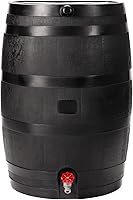
- Round rigid barrels are simple cylinders that fit an open corner and are easy to reposition.
- Collapsible tanks use soft PVC walls that fold down flat when empty.
- Linked systems chain two or more rigid barrels to one downspout for more storage.
A rigid barrel is usually polyethylene, molded in one piece with a lid, inlet and spigot already in place. A collapsible tank uses a fabric-reinforced PVC skin around a frame or a free-standing wall.
That basic split, rigid versus soft, is the first decision. Everything else, from capacity to fittings, follows from where the barrel will live.
Rule: choose rigid if the barrel stays put year after year, and soft-sided only if you need to move or store it.
How does a flat-back barrel fit against a house?
A flat-back barrel is the best choice for a narrow gap along a wall, because one side is molded flat to sit close to siding or a fence. The rounded front still holds the full volume.
FCMP Outdoor makes the Catalina in this shape, with a flat back that lines up with a downspout and a small lid opening that keeps children and pets out. It holds 45 gallons and ships with a 3.5 ft garden hose and a shut-off thumb valve.
The RTS barrel takes the same idea in a textured oak finish. Its flat back sits snugly against a wall or fence, and the front overflow is placed to keep water from pooling against the house.
Flat-back models suit a side yard, a garage wall or the strip between a house and a fence. Measure that strip first: the flat side needs a few inches of clearance so the barrel doesn't rub the siding.
The overflow outlet matters more on a flat-back than on a round barrel. Route the overflow hose across the ground and away from the foundation, ideally to a garden bed or a splash block.
Rule: if the barrel must fit a gap under 2 ft wide, pick a flat-back design before anything else.
When is a round barrel the better pick?
A round barrel wins when the spot is open on all sides and you want to roll or turn the barrel to face the spigot. It has no flat side to line up, so placement is more forgiving.
Round barrels are typically cheaper in their class and come in more colors. They also roll on their base for small adjustments, which helps when you want the spigot facing a path.
The trade-off is the gap behind the barrel. A round shape leaves a curved space against a wall, and the overflow can point back toward the house if you don't turn it.
Pick round for a freestanding corner, the end of a shed or a spot beside a raised bed. Set it on level pavers or a stand, not bare soil, so the base doesn't sink when full.
A round barrel also takes a barrel stand more easily, which lifts the spigot so a watering can fits underneath. That matters on any barrel, round or flat-back, but stands are made mostly for the round shape.
Rule: pick round when the barrel stands away from walls and you may want to move it.
What suits a collapsible rain barrel?
A collapsible barrel is the best type for renters, small yards and anyone who stores the barrel empty in winter. The soft walls fold flat, so it takes little space between seasons.
The Laspeiraux tank holds 53 gallons in a three-layer PVC skin. It has a screw-in faucet that comes as one piece, so there are fewer joints to leak, and circular footpads that keep it from tipping.
The mesh top keeps leaves and debris out while letting overflow drain. Because the walls are soft, the tank needs a flat, firm base and should not sit on a slope or soft mulch.
Collapsible tanks suit a patio, a balcony with a downspout diverter, or a garden where the barrel comes out for the rainy season and goes away for the dry one. They're also easy to carry through a gate or up steps when empty.
Keep them out of long freezing spells. Drain and fold the tank before the first hard frost so ice doesn't split the seams.
Rule: choose collapsible if you need portability or off-season storage more than a rigid, permanent look.
How do linked barrels add capacity?
Linked barrels let you store more water from one downspout without cutting a second inlet. You run a hose from the overflow of the first barrel into the inlet of the second.
The RTS barrel is built for this. It has a built-in overflow valve and can connect to more barrels to raise total storage.
A 50-gallon barrel fills fast in a heavy storm, so a second one catches what would otherwise run off.
Setup is simple but needs care. Both barrels sit on level ground, and the first barrel's overflow feeds the second at the same height or higher.
If the second sits lower, water flows across by gravity and the first stays full.
Place the pair along the same wall, with the overflow from barrel two routed well away from the foundation. That way a storm that fills both barrels still drains to a safe spot.
Two 50-gallon barrels give you 100 gallons of storage, which covers a good stretch of dry weather for a small garden. Link three only if the base can carry the combined weight.
Rule: link a second barrel when one fills within a single storm, and always put both on solid, level footings.
Rigid versus soft-sided: which type lasts longer?
A rigid polyethylene barrel lasts longer in a fixed outdoor spot, while a soft-sided tank is more versatile but needs more care. Sun, frost and weight all treat the two materials differently.
| Feature | Rigid polyethylene | Collapsible PVC |
|---|---|---|
| Shape when full | Fixed, self-supporting | Rounded, needs a level base |
| Sun and frost | UV-resistant, stays out all year | Best stored empty in freezing weather |
| Moving it | Heavy when full, awkward empty | Folds down and carries easily |
| Repairs | Few seams to fail | Seams and faucet joints need care |
| Best spot | Permanent downspout against a wall | Patio, rental yard, seasonal garden |
The RTS and Catalina barrels are molded from UV-resistant polyethylene and hold their shape when full. The Laspeiraux tank relies on its PVC skin and footpads to stay upright.
Weight is the other difference. A full rigid barrel is heavy and stays where you set it.
A soft tank can be drained and moved by one person in a few minutes.
Rule: pick rigid for a permanent installation and collapsible for a barrel that moves between seasons.
How much water should each type hold?
Most home barrels hold 45 to 65 gallons, and the right size depends on your roof area and how fast one barrel fills. Bigger is not always better once weight and space come in.
Our guide to how much water does a rain barrel hold covers the math from roof area and rainfall. A 1,000 sq ft roof sheds about 600 gallons from 1 inch of rain, so a single barrel fills in minutes during a downpour.
That's why overflow matters as much as capacity. Every type here needs a clear path for excess water, whether that's a hose to a bed or a second barrel.
The Catalina holds 45 gallons and is the smallest pick here, which suits a small garden and a lighter base load. The RTS holds 50 gallons, and the Laspeiraux holds 53 gallons when set up.
Capacity also sets the footprint. A 50-gallon barrel is roughly 18 in across and a little under 3 ft tall, so check the height against a window or fence line before you commit.
For garden watering, a rain barrel for garden use fits best when the barrel sits within hose reach of the beds.
Rule: size the barrel to your garden, not to the biggest number, and always plan where the overflow goes.
What fittings does each type need?
Every barrel type needs an inlet, an overflow and a spigot, and the screen or filter is the part that keeps water clean. The fittings you add decide how easy the barrel is to drain and clean.
The most common add-on is a rain barrel filter at the downspout or the inlet. A mesh screen catches leaves and grit before they reach the tank, which reduces algae and keeps a pump from clogging.
The RTS barrel has a screen to keep out debris, a shut-off valve for hose hookup and dual overflow outlets. The Catalina brings a 3.5 ft hose and a shut-off thumb valve, so you can fill a can or connect a longer hose.
The Laspeiraux has a mesh top that filters debris and lets overflow pass. Its screw-in faucet is a single fitting, which cuts the number of joints that can leak.
A diverter kit is the other useful part. It sends the first dirty runoff away from the barrel and routes the cleaner water in, which is worth adding on leafy roofs.
To move water uphill or across a long run, add a rain barrel pump rather than relying on gravity from the spigot.
Rule: fit a screen or filter on any barrel type before water goes to plants or a pump.
Which type fits your home setup?
Match the barrel to where it stands, who uses it and the season, and the choice usually falls out by itself. Use this short set of situations to narrow it down.
- Narrow strip along a house wall: a flat-back rigid barrel, like the Catalina or the RTS.
- Open yard or shed corner: a round rigid barrel on a stand.
- Rental, patio or seasonal garden: a collapsible tank like the Laspeiraux.
- One downspout that overflows fast: two linked rigid barrels.
- Roof under trees: any type, plus a downspout filter and a screen.
The best pick for most homes is the FCMP Catalina. Its 45 gallons cover a typical garden, the flat back fits close to a wall and it comes with a hose and shut-off valve.
It's the easiest barrel here to live with in a tight spot.
Choose the RTS if you want a larger 50-gallon barrel with a brass spigot and the option to link more. Choose Laspeiraux if the barrel has to fold away or move.
Before you buy, check the ground under the barrel. A full barrel of any type is heavy, and flat pavers or a stand keep it level and safe.
Rule: pick the barrel to fit the spot and the season first, then compare capacity and fittings.
Setup and maintenance by barrel type
Every type needs a level base, a downspout connection and a drain plan before the first rain. The differences come in how you winterize and clean each one.
For a rigid barrel, set it on pavers, level it, connect the inlet to the downspout and route the overflow hose away from the house. Drain rigid barrels before temperatures reach freezing so ice doesn't crack the tank.
For a collapsible tank, clear a flat spot, check the footpads are on the ground and tighten the faucet before filling. Drain and fold it for winter, and let it dry fully so mold doesn't set in on the PVC.
Clean screens and filters a few times a year, and flush the barrel when it starts to smell or look green. Water from a roof is not drinking water, so keep a lid or screen on every type.
A stand lifts the spigot on a round or flat-back barrel, which makes a watering can easier to fill. RTS sells one for its barrel as an option.
Rule: drain any barrel before a hard freeze and check the screen every season.
Which of these types of rain barrels should you buy?
The types of rain barrels come down to rigid flat-back, round rigid, collapsible and linked systems, and your spot picks the winner. For most homes, the FCMP Catalina 45-Gallon Barrel is the best pick: 45 gallons, a flat back that fits a wall and a hose with a shut-off valve included.
Choose the RTS 50-Gallon Oak Brass Spigot Barrel if you want 50 gallons, a brass spigot and the option to link a second barrel. Choose the Laspeiraux 53-Gallon Collapsible Barrel if the barrel must fold away for winter or move with you.
Start by measuring the gap along your downspout and the firm ground under it. Then pick the type that fits, and read our how much water does a rain barrel hold guide to size it to your roof.
Frequently asked questions
Is a flat-back barrel better than a round one?
A flat-back barrel tucks tightly against a wall and keeps the overflow away from the foundation, while a round barrel is usually easier to roll into place and cheaper in its class. Choose flat-back for a narrow gap along a house wall and round for an open yard corner.
Can you connect two rain barrels together?
Yes, many rigid barrels have an overflow valve that lets you run a hose into a second barrel. Both need a stable base on level ground, and the first barrel must sit higher or at the same height so water flows across rather than back toward the house.
How much water does a typical rain barrel hold?
Most home rain barrels hold 45 to 65 gallons. Storage above 55 gallons gets heavy: a full 60-gallon barrel weighs over 500 lb, so it needs a firm, level base rather than soft soil.
Our capacity guide breaks the sizes down.
Do collapsible barrels last as long as rigid ones?
Rigid polyethylene barrels resist sun and frost for years in a fixed spot, while three-layer PVC collapsible barrels are lighter and easier to store empty. A collapsible tank works best when you drain and fold it for winter rather than leaving it out in freezing weather.
Do I need a filter on a rain barrel?
A mesh screen or downspout filter keeps leaves and grit out of the barrel and reduces algae. It is worth fitting on any type, especially before water goes to a drip line or a pump, which can clog with debris.