How to Use Rain Barrels to Minimize Flooding
To use rain barrels to minimize flooding, capture roof runoff at the downspout and send the overflow to a safe, graded spot away from the foundation. Size the barrels to the roof area they serve and keep every overflow path clear.
On this page (8 sections)
- How do rain barrels reduce flooding around a house?
- How many rain barrels does your roof need?
- How do you connect a rain barrel to a downspout without flooding?
- Where should the overflow go to prevent foundation flooding?
- Does a rain barrel filter help in heavy rain?
- Why does the barrel stand matter for flood control?
- How do you keep rain barrels working all season?
- Which setup works best for your yard?
To use rain barrels to minimize flooding, capture roof runoff at the downspout and send the overflow to a safe, graded spot away from the foundation. Size the barrels to the roof area they serve and keep every overflow path clear.
Rain barrels slow roof water and spread it over time, so a storm doesn't dump everything next to your walls at once. The barrels do the buffering; the overflow route does the flood protection.
How do rain barrels reduce flooding around a house?
They hold roof runoff and release it slowly, so less water reaches your foundation and yard in one burst. A single downspout on a typical roof can pour out hundreds of gallons in a heavy storm.
A barrel catches that first flush and stores it for the garden. Once it's full, the overflow leaves through a hose or outlet rather than splashing against the foundation.
This is why barrels work best as part of a chain: roof, gutter, downspout, diverter, barrel, overflow. Each piece slows the water a little more.
The storage volume is limited, so the flood benefit comes from timing and direction. A barrel that fills in the first hour and overflows to the driveway sends water right back to where it came from.
How many rain barrels does your roof need?
Plan about one barrel per 100 square feet of roof feeding a downspout, and more where storms are heavy. A 50-gallon barrel fills from a 1,000-square-foot roof section after about 0.08 inches of rain.
Measure the footprint of the roof area that drains to each downspout, not the whole house. Only the water reaching that one downspout matters for that barrel.
For the math on tank size and roof area, see how much water does a rain barrel hold. It walks through capacity and fill rates so you can size a set before you buy.
If your downspouts are close together, one larger set of barrels may cover them. Spread across several corners, several smaller barrels are easier to route.
Keep the count realistic for your roof pitch, since a steep roof sheds water faster than a shallow one and fills each barrel sooner.
Who should choose the RTS ECO 50-Gallon Rain Barrel?
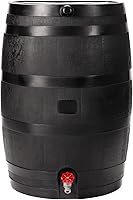
The RTS ECO is a good fit for a flat-back spot against a wall or fence, where a round barrel would waste space. It holds 50 gallons and has a built-in overflow valve for managing excess water.
RTS makes it from UV-resistant polyethylene using 100% recycled plastic. The plastic spigot is easy to reach, and the overflow valve lets you link barrels or send excess water away from the house.
At 24 inches long, 19 inches wide and 34 inches high, the flat back keeps the depth down so it tucks into narrow side yards and against garage walls.
Skip it if you want a decorative wood look or a much larger tank. The flat back is its main advantage; a plain round barrel can cost less for the same capacity.
How do you connect a rain barrel to a downspout without flooding?
Cut the downspout above the barrel and fit a diverter so roof water enters cleanly and excess can leave. A diverter also keeps debris out of the barrel and lets you direct flow when the tank is full.
Cut a section of downspout high enough to sit above the barrel's top. Slide the diverter into the gap and follow its instructions for the inlet and outlet ports.
Run the diverter's hose to the barrel inlet. Keep the barrel's overflow outlet clear and point it toward a splash block or graded swale.
Don't seal the downspout into the barrel lid without an overflow path. A sealed full barrel has nowhere to send the next wave of water.
Who should choose the Oatey Mystic Rainwater Diverter?
The Oatey Mystic suits standard 2 in x 3 in residential downspouts and sends water straight into a barrel. It's made of UV-resistant material that can be painted to match the house.
Oatey includes a 4-foot high-flow hose to connect the diverter to the collection container. The outlet port lets you send water onward when the barrel is full.
The whole fitting measures 6 inches long, 4 inches wide and 8 inches high, so it slips into a short cut section without a long run of exposed downspout.
Skip it if your downspouts are a different size. Measure your downspout before cutting.
Where should the overflow go to prevent foundation flooding?
Point every overflow outlet at least 6 to 10 feet from the foundation, toward ground that slopes away from the house. The overflow is where most flood problems start.
A splash block under the outlet spreads the flow and stops it digging a hole. A shallow swale or a dry well lets the water soak in instead of running along the wall.
Check the slope with a level or a quick test run from a hose. Water should move away from the house, not pool beside the basement or crawlspace.
Keep the outlet clear of leaves and mulch. A clogged overflow turns a full barrel into a slow leak at the top or the seams.
If you link barrels, run the overflow from the last one in the chain to the safe spot so the whole set has a single clear exit.
Does a rain barrel filter help in heavy rain?
Yes, a filter keeps leaves and grit out of the outlet and overflow, which matters most when storms bring debris. A clogged outlet is the main reason a barrel overflows where you don't want it.
Gutter guards and a filter at the downspout cut the debris load. Clean the screen or mesh before storm season and after windy days.
For screen, mesh and first-flush choices, read do you need a filter on a rain barrel. It covers how each type handles leaves and grit.
A first-flush diverter also helps by sending the dirtiest early water away. Cleaner water means fewer blockages in the hose and outlet.
Why does the barrel stand matter for flood control?
A stand lifts the spigot so you can drain the barrel fully into a bucket or hose before the next storm. A full barrel that can't be emptied easily is just a water weight sitting next to the house.
Good Ideas says its Rain Wizard Universal Stand supports over 1,000 lbs of water weight. The oak-finish stand raises the barrel so buckets fit under the spigot without tilting.
It's molded from UV-resistant polyethylene resin, so the stand holds up outdoors through repeated storm seasons.
It fits most Good Ideas rain barrels with 19 to 26 inch round bases. The flat-back profile sits against a wall or fence, matching the RTS barrel's placement.
Good Ideas excludes the Riverwalk, Savannah and Amphora series as well as the Rain Wizard 300, so check your barrel's base before buying.
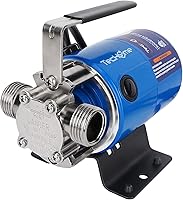
Skip it if you plan to pump water uphill to the garden. For that setup, compare pumps for rain barrels and place the barrel where gravity does most of the work.
How do you keep rain barrels working all season?
Drain, clean and check the setup before and after each storm season, and empty the barrel when a big storm is forecast. Routine checks keep the overflow path open when it matters.
- Clear gutters and downspouts of leaves before fall rains.
- Rinse the screen or filter and check the inlet for grit.
- Confirm the overflow hose still slopes away from the house.
- Drain the barrel partly before a forecast of heavy rain to free capacity.
- Check the ground under the barrel for sinking or soft spots.
Mosquito screens on the inlet and lid keep standing water from becoming a breeding spot. Keep the lid secure so the barrel doesn't become a hazard for children or pets.
In freezing climates, empty and disconnect the barrel before the first hard frost. Trapped water can crack the plastic over winter.
Which setup works best for your yard?
Start with one diverter and one or two barrels on the downspout nearest your wettest corner, then add capacity where storms still overflow. The overflow route is the part that decides whether the setup helps or hurts.
Pick the Oatey Mystic diverter for a 2 x 3 in downspout and the RTS ECO barrel for a flat-back wall spot. Add the Rain Wizard stand if you want to empty the barrel easily between storms.
For a garden that needs the water moved uphill, look at a rain barrel for garden use and pair it with a pump.
The whole point of learning how to use rain barrels to minimize flooding is to slow the water and steer it away from the house. Set the barrels up before the rainy season, keep the outlets clear, and check the ground after every heavy storm.
Frequently asked questions
How many rain barrels do I need to reduce flooding?
Start with one barrel per 100 square feet of roof feeding that downspout, then add more if storms overflow the first barrel. A 50-gallon barrel fills from a 1,000-square-foot roof in about 0.08 inches of rain, so large roofs need several barrels or a good overflow path.
Can rain barrels stop a yard from flooding?
No, barrels slow and spread runoff rather than stop it. They hold a set volume and then pass the rest on, so the overflow route matters as much as the barrel.
Pair them with grading and drainage that carry water away from the house.
Where should the overflow from a rain barrel go?
Send it down a splash block, a graded swale or a dry well at least 6 to 10 feet from the foundation. Keep the outlet clear and slope the ground away from the house so the overflow soaks in before it reaches a basement wall.
Do I need a diverter or a filter for flood control?
A downspout diverter keeps the first roof water cleaner and lets you control how much enters the barrel. A filter traps leaves and grit so the outlet and overflow don't clog.
Both help the setup work through heavy rain, when debris is most likely.
Can a full rain barrel cause flooding if I place it wrong?
Yes. A full barrel whose overflow dumps next to the foundation can make damp walls worse.
Place barrels on firm level ground, run the overflow away from the house, and check the outlet before each storm season.