How to Build a Rain Barrel Stand
Build a rain barrel stand from pressure-treated lumber or concrete blocks, sized to the barrel's base and tall enough to clear your spigot. Level it on firm ground, brace it against tipping, and keep the raised platform strong enough for the full barrel's weight.
On this page (9 sections)
- How much weight does a rain barrel stand need to hold?
- How high should a rain barrel stand be?
- What materials should you use to build a rain barrel stand?
- How do you build a wooden rain barrel stand?
- How do you stack a cinder block stand?
- How do you level and anchor the stand?
- Should you build a stand or buy one?
- How do you set the barrel on the stand safely?
- Which supplies do you actually need to build a rain barrel stand?
Build a rain barrel stand from pressure-treated lumber or stacked cinder blocks, sized to fit the barrel's base and tall enough to clear the spigot. Level it on firm ground and brace it so a full, top-heavy barrel won't tip.
Here is how to plan a stand that stays stable when the barrel is full.
A full 55-gallon barrel weighs over 450 lb, so the base matters more than the barrel itself. Get the size, height, and bracing right and the stand will last several seasons of rain.
How much weight does a rain barrel stand need to hold?
Plan for the full barrel plus fittings, so over 450 lb for a 55-gallon barrel. Water weighs about 8.34 lb per gallon, so a 55-gallon barrel holds about 459 lb when full.
Add the barrel's own weight and your stand needs to carry more.
Build for at least double the load in mind for safety. Wood rated for ground contact handles this well when the legs are thick enough and the top is braced.
Steel stands often quote a load capacity of 1200 lb, which leaves plenty of margin.
The surface under the stand matters as much as the stand. Soft or wet soil will sink under 460 lb and tip the barrel.
Set blocks or pavers on compacted ground so the legs sit flat.
Check the size of your barrel's base before you buy lumber or blocks. Round 50 and 55-gallon barrels often measure close to 23 inches across, so a square base of about 26 to 28 inches gives you a little overhang without a wide footprint.
How high should a rain barrel stand be?
Raise the stand just high enough for your watering can to clear the spigot, often around 12 to 20 inches. Most spigots sit low on the barrel, so a stand of about a foot clears a bucket on flat ground.
Many steel stands stand about 19.6 inches tall.
Higher stands give more water pressure, since gravity feeds the hose. That helps if you run a soaker hose or fill a far-off watering can.
But every extra inch also makes a full barrel more awkward to reach and harder to tip back.
Keep the height modest unless you need the pressure. A stand that puts the spigot at hip height or below is easiest to fill from.
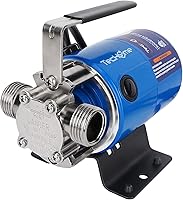
If you plan to attach a hose, check our guide to choosing a rain barrel pump for options when gravity isn't enough.
Measure from the ground to your tallest bucket plus the spigot's height on the barrel. That total tells you the stand height you need.
Add a couple of inches for uneven ground.
What materials should you use to build a rain barrel stand?
Pressure-treated lumber and concrete blocks are the two reliable choices. Treated lumber is light, easy to cut, and simple to brace.
Cinder blocks are heavy but need no tools and won't rot.
For a lumber stand, use 4x4 posts for the legs and 2x6 boards for the frame and top. Ground-contact rated wood resists moisture from the soil.
A plywood top spreads the barrel's weight across the frame.
For a block stand, stack cinder blocks two high in a square or cross pattern. A square stack of 8 to 12 blocks makes a stable base for a round barrel.
Set the blocks flat and level.
Avoid untreated wood and thin deck boards. Both warp and split under the weight and moisture.
Plastic or composite lumber also works, though it flexes more unless you brace it well.
How do you build a wooden rain barrel stand?
Cut four legs, frame them into a box, and cap it with a braced top. The order matters more than the fancy cuts, so keep it simple.
- Measure the barrel's base and add 2 to 3 inches on each side for the frame size.
- Cut four 4x4 legs to your chosen height, all the same length.
- Build two rectangles from 2x6 boards and fix them between the legs near the top and bottom.
- Fit a plywood or plank top over the upper frame and screw it down.
- Add corner braces or diagonal pieces to stop the frame from racking.
Cut the legs on level ground so the stand sits flat. Screw the top down through the frame rather than into the end grain of the legs, which splits easily.
Set the finished stand on pavers so the wood legs stay out of standing water. A stand that sits directly in mud will rot at the base, even with treated lumber.
How do you stack a cinder block stand?
Stack blocks two courses high in a square pattern and cap with a flat paver. No tools are needed beyond a level, and the blocks won't rot or rust.
Lay the first course flat in a square, leaving a hollow center. Add the second course in the same pattern, offsetting the joints so no seam lines up.
Set a square paver or a piece of thick plywood on top to spread the load.
Check each course with a level as you go. A block stand that leans even slightly will push the barrel off balance when it's full.
Use shims under individual blocks to correct small gaps.
Fill the hollow centers with gravel if the ground is soft. The gravel helps drain water away and adds a little weight low down.
Avoid stacking blocks more than two or three courses high, since taller stacks can topple.
How do you level and anchor the stand?
Set the stand on compacted, level ground and anchor it if your site is windy. Level ground keeps the barrel upright; anchoring keeps an empty barrel from blowing over.
Clear grass and loose soil from the footprint, then tamp the ground flat. Set pavers or a gravel pad under each corner so the legs don't sink.
Check the top with a level in both directions.
Strap the stand to the ground with stakes and corner brackets on windy sites. An empty barrel is light and catches the breeze, so a gust can tip it before the first rain.
Keep the stand away from downspouts that could pour water against the base. Set the barrel so the inlet lines up with the downspout without a long run of pipe.
Also keep it away from slopes that channel runoff under the stand.
Should you build a stand or buy one?
Build if you want a custom height or the lowest cost; buy a steel stand if you want a level base with no carpentry. A built stand costs less in materials but takes an afternoon of work.
A steel stand arrives ready to set up.
If you decide to buy, compare options in our guide to the best rain barrel stands. Steel stands handle the load without rot and often come with a level top.
Whichever you choose, check the base size against your barrel. A stand that's too small leaves the barrel overhanging and unstable.
Also plan for how much water does a rain barrel hold so you know the load you're building for.
How do you set the barrel on the stand safely?
Place the empty barrel on the stand, then anchor and connect it before it fills. An empty barrel is light enough for two people to lift; a full one is not.
Set the barrel centered on the stand so its weight sits over the middle. Attach the spigot and any overflow pipe before the first rain.
Run the overflow hose away from the foundation.
Connect the downspout with a diverter so the barrel fills from rain and not from a torrent. A full barrel that keeps filling will overflow and may loosen the stand.
Our guide to the best rain barrel for a garden covers diverters and overflow setups.
Strap the barrel to the stand if it's on an exposed site. A full barrel is hard to push over, but a gust against an empty one can still tip it.
Leave a gap between the stand and the wall so you can reach the spigot and check for leaks.
Which supplies do you actually need to build a rain barrel stand?
For anyone learning how to build a rain barrel stand, get the base, the height and the bracing right first. Start with pressure-treated lumber or cinder blocks, size the top to your barrel, and set it on level, compacted ground.
Build it yourself if you want a custom height and the lowest cost. Buy a steel stand if you'd rather skip the carpentry and want a level top that won't rot.
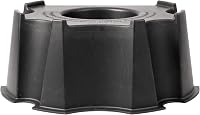
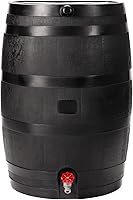
The RTS stand fits the RTS 55-gallon Premium Flat Back Rain Barrel, the LLNYFL stand fits most round barrels up to 55 gallons, and the I'Ezonk stand adds adjustable legs for uneven ground.
Measure your barrel base before you cut or buy anything. Then set the empty barrel in place, anchor the stand, and connect the spigot and overflow before the rain arrives.
A stand built for the full load and set level will keep the barrel stable all season.
Frequently asked questions
Can I build a rain barrel stand on uneven ground?
Level the ground first or use a stand with adjustable legs. A full barrel is top-heavy, so a slope of more than a couple of inches across the base makes tipping more likely.
Compact the soil and set blocks or pavers under each leg.
Do I need a permit to build a rain barrel stand?
A small barrel stand usually needs no permit, but check your local rules before you build. Some areas limit rainwater collection or how close a barrel can sit to a property line.
Your town or county office can confirm.
What is the cheapest way to build a rain barrel stand?
Cinder blocks stacked two high in a square pattern are the cheapest base. A simple treated lumber box frame with a plywood top costs a little more but is lighter to move.
Both cost far less than a steel stand.